


Retail is changing fast. Customers expect speed, relevance, and smooth service across every channel. That pressure pushes teams to invest in automation, prediction, and better decision-making. This is why ai retail technology trends now shape how brands sell, stock, and support shoppers.
This guide explains why AI matters in retail and what the next wave looks like. It also breaks down six trends with practical use cases you can apply in real operations.
Why AI Is Transforming the Retail Industry
AI helps retailers compete in a world with tighter margins and higher expectations. It turns messy data into clear actions. It also links online behavior to store behavior, so teams can plan one connected customer journey.
Spending and adoption show the shift. Grand View Research estimates the AI-in-retail market at USD 11.61 billion in 2024 and is expected to reach USD 14.49 billion in 2025, which signals strong demand for AI tools in daily retail work.
Retailers do not use AI for one reason. They use it for many reasons that connect together. First, AI supports better choices in pricing, promotions, and product mix. Next, it improves service quality through faster responses and smarter self-service. Then, it reduces waste by matching inventory to demand more closely.
AI also changes how work gets done inside retail teams. It can draft product descriptions, summarize feedback, and propose actions for store managers. It can also spot patterns that humans miss, such as early signs of churn or a sudden shift in demand.
Momentum keeps building because the results show up in many areas at once. NVIDIA reports that 9 out of 10 retailers now adopt or pilot AI, which suggests AI has moved beyond experiments and into mainstream planning.
Digital behavior also reflects the change. Adobe reports retail led the jump in AI-referred visits, with traffic up 693% year over year, which means shoppers already use AI tools to start and guide their buying journeys.
Retail leaders now focus on value, not novelty. Salesforce links AI to revenue impact during peak demand. Its holiday data says AI and agents drove 20% of all retail sales and fueled $262 billion in revenue, which shows AI can influence outcomes at scale when teams deploy it well.
Finally, AI enables stronger personalization without forcing teams to manually segment customers. McKinsey notes personalization can reduce customer acquisition costs by as much as 50 percent, lift revenues by 5 to 15 percent, and increase marketing ROI by 10 to 30 percent, so retailers can justify investments with clear commercial logic.
Top 6 AI Retail Technology Trends and Their Use Cases
Trend 1: Agentic Commerce and AI Personal Concierges

Agentic commerce changes the role of AI in shopping. Retailers used to deploy chatbots that answered questions. Now they build AI concierges that act like a personal shopper. The system can search, compare, and plan purchases based on a shopper’s intent.
This shift matters because shoppers often start with a problem, not a product. For example, someone might want a “quick healthy dinner for two” or “a gift for a new parent.” A concierge can translate that goal into items, bundles, and delivery choices. It can also adapt to constraints, such as budget, allergies, style, or loyalty perks.
What Agentic Commerce Looks Like in Practice
An AI concierge works best when it connects to real retail systems. It needs product catalogs, real-time inventory, and delivery options. It also needs clear guardrails. Then it can create a shortlist, explain trade-offs, and guide checkout steps.
Retailers can also use these agents for service. The agent can track orders, start returns, and resolve common issues. That reduces friction and improves satisfaction.
Use Cases Retail Teams Can Deploy
- Intent-to-cart journeys that build a basket from a shopper’s goal and constraints.
- Dynamic bundles that pair complementary items, such as a camera with storage and cleaning tools.
- Concierge-driven loyalty that recommends how to use points, perks, or member-only offers.
- Post-purchase agents that handle order changes, delivery timing, and return labels.
- Store-associate copilots that suggest upsells and answers during assisted selling.
Why This Trend Ranks High
It improves conversion by removing decision fatigue. It also supports hyper-personalization because it reacts to each shopper’s context. Over time, it can learn what “good” looks like for different customer types.
Market signals support the shift. McKinsey estimates agentic commerce could drive up to $1 trillion in orchestrated revenue by 2030, with global projections reaching as high as $3 trillion to $5 trillion, which explains why large platforms and retailers now race to build agent-ready experiences.
To win here, retailers should focus on trust. They should also focus on product data quality. Agents can only recommend what they can understand.
Trend 2: Computer Vision in Autonomous Stores
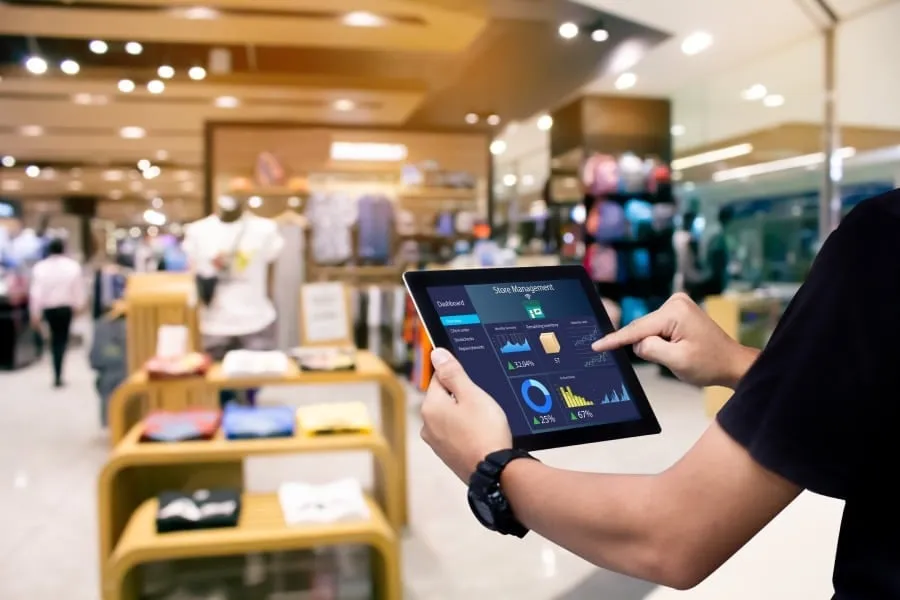
Computer vision changes what “smart stores” can do. It does not just watch for theft or count foot traffic. It can recognize actions, measure shopper flow, and connect in-store behavior to outcomes.
This trend also powers “no-touch” checkout flows. Retailers combine edge AI with cameras and sensors. Then the store can identify items and assign them to the right shopper without a physical scan. Edge processing matters because it reduces latency. It also limits data movement outside the store.
Autonomous Store Use Cases Beyond Checkout
Many retailers focus on checkout first. However, the bigger value often comes from insights. Computer vision can reveal how shoppers move through aisles. It can also show where they hesitate, compare, or abandon.
- Heatmaps that highlight high-traffic areas and dead zones for layout optimization.
- Shelf monitoring that detects gaps, misplacements, and planogram drift.
- Queue detection that triggers staff reallocation before lines get long.
- Loss prevention that flags suspicious patterns without relying on manual review.
- Customer journey analytics that links in-store behavior to campaign impact.
Where Computer Vision Works Best
It fits best in high-volume stores where small delays add up. It also fits in formats where friction hurts loyalty, such as convenience and grocery. Still, retailers should start with one measurable pain point, like shelf gaps or long queues. Then they can expand.
Success depends on clear signage and transparent policies. It also depends on strong store operations. AI cannot fix broken restocking routines. It can only expose them faster.
Trend 3: Generative AI in Creative Retail and Virtual Try-ons

Generative AI reshapes retail creativity. It can produce product descriptions, images, and ad variations in minutes. That helps teams scale content for many segments and channels. It also helps localization. A retailer can tailor tone, language, and benefits for each market without rewriting everything by hand.
GenAI also improves virtual try-ons. It can render more realistic fits, colors, and textures. It can also create virtual models that reflect diverse body types and skin tones. That improves customer confidence and reduces hesitation during online buying.
Creative Retail Use Cases
- Automated product copy that adapts to channel limits and brand voice.
- Personalized landing pages that change based on intent and seasonality.
- Dynamic ad creatives that test different hooks and visuals for each segment.
- Customer support knowledge that turns policy documents into clear answers.
- Store training content that turns playbooks into short lessons for associates.
Virtual Try-on and “Magic Mirror” Use Cases
Retailers use virtual try-ons in fashion, beauty, eyewear, and accessories. The goal is simple. Customers want to see “me with this product,” not “a model with this product.”
- AR try-ons for lipstick shades, foundation matches, and skincare routines.
- Virtual fitting rooms that simulate drape, fit, and styling suggestions.
- In-store smart mirrors that recommend sizes and matching items.
- Virtual models that showcase the same product across multiple looks quickly.
Proof Points Retail Leaders Watch
Retailers care about conversion. They also care about returns. Evidence supports the upside when teams deploy AR and 3D assets well. Think with Google cites Shopify research that VR/AR assets can drive a 94% higher conversion rate than listings without that content, which explains why virtual try-on now sits at the center of many eCommerce roadmaps.
Still, GenAI needs controls. Teams should review outputs for accuracy and compliance. They should also protect brand consistency. A fast content engine can also create fast brand damage if no one checks the work.
Retailers also show strong interest in GenAI for marketing output. NVIDIA’s retail report says 68 percent want to use generative AI to transform marketing and content generation, so creative automation will keep growing across retail categories.
Trend 4: AI-Driven Supply Chain and Predictive Merchandising

Supply chain volatility pushes retailers toward prediction. AI helps retailers forecast demand, plan inventory, and reduce stock issues. It also improves merchandising by linking demand signals to decisions on assortments, pricing, and promotions.
This trend matters because inventory mistakes cost money fast. Overstock ties up cash. Out-of-stock kills trust and revenue. Predictive systems reduce both issues by turning signals into early action.
Predictive Merchandising Use Cases
- Demand sensing that uses real-time signals, such as weather and local events.
- Assortment planning that matches store clusters to regional preferences.
- Promotion planning that predicts lift and avoids cannibalizing core items.
- Dynamic pricing guardrails that balance competitiveness with margin goals.
- New product launches that simulate demand before wide rollout.
Warehouse and Logistics Use Cases
Retailers also push AI into physical operations. Robotics and AI scheduling can reduce travel time inside warehouses. Route optimization can also reduce delivery delays.
- Autonomous mobile robots that move totes and replenish pick zones.
- Computer vision quality checks that reduce packing and labeling errors.
- Last-mile routing that adapts to traffic and capacity in near real time.
- Predictive maintenance for conveyors and sorting systems.
- Supplier risk monitoring that flags delays before they impact shelves.
Signals From Retail Leaders
Many retailers already invest in AI for supply chain visibility and near-term ROI. Deloitte reports 30% of retailers surveyed leverage AI for supply chain visibility, and this figure is expected to climb to 41% within the next year, which shows AI has become a core lever for operational resilience.
Inventory distortion also shows why predictive merchandising matters. IHL estimates the total cost of inventory distortion at $1.7 trillion, so even small improvements can create meaningful financial impact for large retail networks.
Start small to win faster. Retailers can begin with one category, one region, and one planning cycle. Then they can expand when data pipelines and decision routines stabilize.
Trend 5: The Industrial Metaverse and Digital Twins of Retail Spaces

Digital twins bring simulation to retail. A digital twin is a living model of a store, warehouse, or even a full retail network. It updates based on real data. Then teams can test changes before they touch real operations.
The industrial metaverse builds on this idea. It blends 3D environments with real-world data streams. Retailers can use it to plan layouts, train teams, and coordinate complex operations across sites.
Digital Twin Use Cases for Stores and Warehouses
- Store layout testing that simulates traffic, dwell time, and conversion paths.
- Shelf placement experiments that predict impact on cross-sell and basket size.
- Staff scheduling simulations that balance labor cost with service quality.
- Warehouse flow modeling that reduces congestion and improves pick efficiency.
- Safety testing that identifies risk zones before incidents happen.
3D Shopping Experiences and Remote Discovery
Some retailers also explore 3D shopping journeys. Customers can view products in a richer space. They can also get guided support through AI inside that experience. This works well for complex products, such as furniture, home improvement, and premium consumer electronics.
Digital twins can also support remote retail operations. A regional manager can review store health without visiting every location. They can also test plan changes with less disruption.
Why This Trend Keeps Growing
Simulation reduces risk. It also reduces wasted spend. Teams can avoid costly redesigns by testing early. Evidence supports growing adoption across industries. A widely cited review notes Gartner estimates over 40 percent of large companies worldwide will be using Digital Twin in their projects by 2027, which suggests retail will keep investing in this capability as tools mature.
Retailers should connect digital twins to real KPIs. Otherwise, they risk building beautiful models that do not change real outcomes. Strong alignment keeps this trend practical and measurable.
Trend 6: Privacy-First AI and Confidential Computing
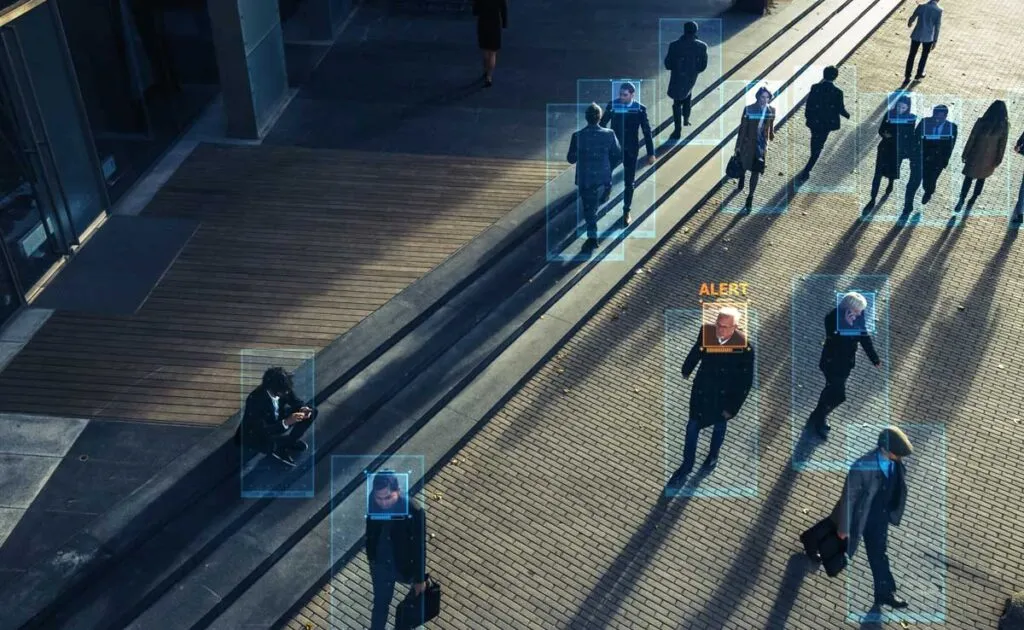
Retail AI depends on data. However, privacy rules keep tightening, and customers keep watching. That creates a new priority: teams must protect data while still learning from it.
Privacy-first AI focuses on safer data handling. It also focuses on minimizing data collection. It can use techniques like anonymization, differential privacy, and federated learning. These approaches reduce exposure while keeping models useful.
Confidential computing adds another layer. It protects data while it is in use. That matters when teams process sensitive information, such as customer profiles, payment-related attributes, and loyalty records. This approach can also help when retailers collaborate with partners and still want to limit raw data sharing.
Privacy-First Use Cases Retailers Actually Need
- Secure personalization that uses consented attributes and clear opt-out paths.
- Fraud detection that improves signals without exposing raw identity data.
- Partner analytics that shares insights without sharing customer-level records.
- Safer customer support copilots that avoid exposing private data in answers.
- Store analytics that focuses on flow patterns instead of identifying people.
Why This Trend Now Feels Urgent
Security incidents can wipe out trust fast. They can also disrupt operations. IBM reports the global average cost of a data breach at USD 4.4 million, so privacy-first architecture can reduce both financial and brand risk.
Retailers should also design AI governance early. Governance includes access control, audit trails, and clear model ownership. It also includes policies for training data, retention, and third-party sharing. These steps make privacy a product feature, not a legal afterthought.
Challenges and Implementation Strategies for Retailers
AI creates real upside, but it also creates real friction. Retailers face legacy systems, fragmented data, and fast-changing expectations. So teams need a clear path from pilot to scale.
Start with the biggest blocker: data quality. Retail data often lives across POS, ERP, eCommerce, CRM, and store systems. That split creates mismatched product IDs, incomplete attributes, and stale inventory signals. Fixing data foundations makes every later AI step easier.
Next, focus on integration, not demos. Many AI pilots fail because they sit outside real workflows. A forecast model only helps if planners trust it and act on it. A shopping agent only helps if it can check stock, apply promotions, and support checkout. Therefore, pick use cases that connect to real systems early.
Talent also becomes a challenge. Retailers need people who understand both operations and data. They also need translators who can turn store problems into model requirements. You can solve this with mixed teams. Pair merchants, store ops leaders, and data engineers from day one.
Cost control matters as well. AI can raise cloud and compute spend. It can also raise vendor costs if tools sprawl. To manage this, standardize platforms where possible. Reuse shared components like feature stores, identity resolution, and experimentation tools.
Governance needs equal attention. AI can hallucinate. AI can also amplify bias if training data reflects old patterns. So retailers should define approval steps for high-impact actions. They should also log model decisions and monitor drift over time.
Privacy and security need practical controls. Limit data access by role. Mask sensitive fields by default. Track which systems feed training pipelines. Then add human review for customer-facing content that can create liability, such as claims about health, ingredients, or regulated products.
Change management often decides success. Store teams and call center agents need training that feels useful, not forced. So roll out tools that save time first. A good example is an associate copilot that answers product questions fast. Once teams trust the tool, they will accept bigger AI changes.
Finally, measure outcomes in simple terms. Pick a baseline. Track a short list of KPIs. Then run controlled tests before wide rollout. This approach keeps AI grounded in business value and prevents teams from chasing hype.
Conclusion
AI retail will not slow down. Customer expectations will keep rising. So retailers will need systems that predict, see, and act in real time.
That is why ai retail technology trends matter more than ever. They connect personalization, store intelligence, and supply chain speed. They also help teams protect customer trust while they scale automation.
At Designveloper, we help retailers turn these trends into working products. Since 2013, we have built web and mobile platforms with strong UX and clean architecture. We also bring hands-on experience from 100+ successful projects, so we know how to move from idea to launch without chaos.
As a leading software development firm, we focus on outcomes, not hype. We design data pipelines that stay reliable under load. Then we ship AI features like smart search, recommendation flows, demand forecasting, and vision-based store analytics. We also build secure backends and MLOps workflows, so your models stay accurate after release.
Scale matters in retail, so we build for it. Our teams helped deliver products that reached 100 million users, so we understand performance, stability, and rapid iteration. If you want to launch an AI concierge, upgrade store analytics, or modernize forecasting, we can build the roadmap and the system with you.