


The job changes the moment you get the title. The scope expands, expectations shift and accountability moves beyond technology delivery to business outcomes.
In Dear New CIO, veteran technology leaders reflect on the advice they would offer someone stepping into the role for the first time.
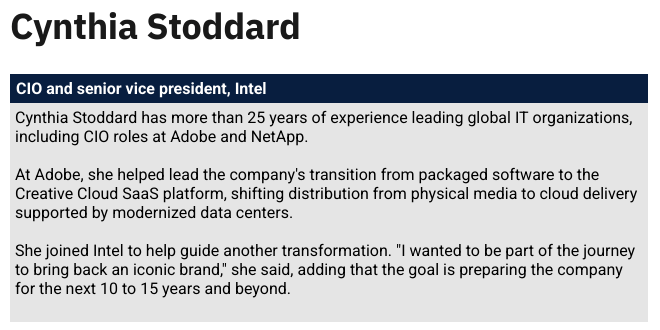
Here, Intel CIO Cynthia Stoddard discussed what surprises new CIOs most — and why the first six months often determine whether credibility is built or lost.
The job changes overnight
Stoddard said that when she moved into a CIO role after serving as a divisional technology leader, the dynamics of her job shifted immediately.
“It was interesting, because I had been in the business for a long time, but my relationships changed overnight compared to my previous role as a VP of applications. Suddenly, the expectations were different.
“People and process mattered far more than before. Technical credentials — once something one could reliably lean on — no longer carried the same weight. You were expected to understand the business, not just technology. The scope of responsibility expanded, along with accountability for business outcomes. You were also expected to understand the company’s bottom line.
“To be clear, not everyone makes the transition successfully — or feels comfortable in that role.”
Don’t arrive with a blueprint
A common misstep in the first six months, Stoddard said, is assuming that a strategy that worked elsewhere will work again.
“One of the biggest mistakes people make is believing that one size fits all — or arriving with a blueprint and assuming it will work everywhere. The fact is, every organization is different — both on the business and IT sides.
“Many CIOs come in and suggest that this or that was a bad decision. But those decisions may have been made for good reasons — even ones made just a year ago.
“That said, IT organizations and their CIOs should not be afraid to revisit past decisions. Businesses change. Context changes. What made sense before may no longer apply,” she said. Bottom line: “I don’t come in with a template. I make that clear in the interview process. Instead, I listen and learn first.”
Respect your business partners
Learning to respect business partners is critical, Stoddard said.
“Approaching the role too aggressively can damage credibility. It’s hard to re-earn the respect of business partners if you come in like a bull in a china shop.”
Those relationships are essential for understanding how technology and business processes intersect.
“You need business partners in order to do the [CIO] job — and to help you understand what needs to be done to fix business processes.”
Execution builds credibility
If the first step for any new CIO is to listen and understand the business before making changes, execution and reliability come next, Stoddard said.
“If the network is down or systems aren’t running reliably, none of the transformative programs you’re building will matter,” she said.
That operational foundation is needed “to earn the trust required to drive broader innovation over time.”
AI raises the stakes — but the fundamentals remain
The core skills of a successful CIO do not change in the AI era, Stoddard said, but the need for strong data and cultural foundations becomes more critical.
“AI will do what we ask it to,” she said. “So organizations must ensure they have the right data infrastructure and a clear understanding of their business processes before expecting to generate meaningful outcomes.
Leaders also need to identify where AI can enable larger, more disruptive “big bets, whether that’s addressing persistent business challenges or rethinking how work gets done in specific areas of the organization,” she said.
Never stop learning
“CIOs should approach their role as lifelong learners,” Stoddard said.
“Partnerships and ecosystem engagements are important — relationships matter in this industry. Collaborating with other technology leaders provides valuable insight into what’s coming next. Staying connected to the VC community can also offer early visibility into emerging technologies and help ensure organizations don’t miss the next wave of innovation.”