


Meta added some new scam prevention features to Facebook, WhatsApp and Messenger. The company also announced the results of its most recent large-scale scam detection operation, in collaboration with law enforcement groups, which led to the arrest of 21 people.
First, Meta added new warnings on Facebook that will let users know when they send or receive a request from an account that shows signs of suspicious activity.
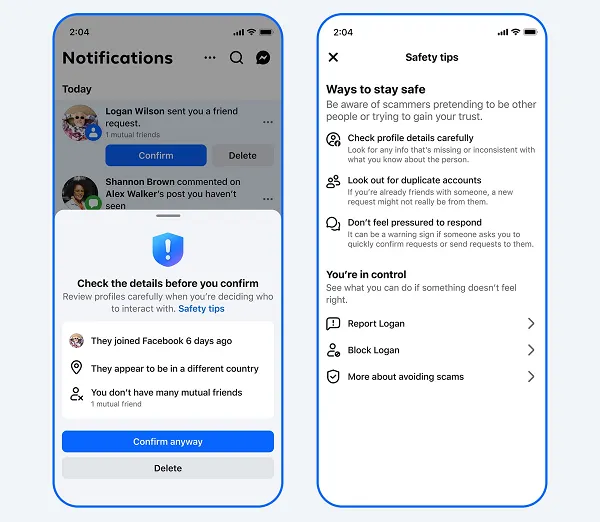
The alerts will include notes on things such as how long the account has been active, where it’s based and whether there are any mutual connections. These details can help identify potential scammers and stop users from making risky connections.
On WhatsApp, Meta added device linking warnings, which will prompt users to think twice about approving link requests.
As explained by Meta: “Sometimes scammers ask users to enter their phone number, followed by a device linking code on WhatsApp. They may also try to trick people into scanning a QR code under false pretenses, which would then link the scammer’s device to their account.”
The new alerts will let users know when behavioral signals suggest a linking request might be suspicious.
And on Messenger, Meta has updated scam detection to let users know if a chat contains patterns of common scams.
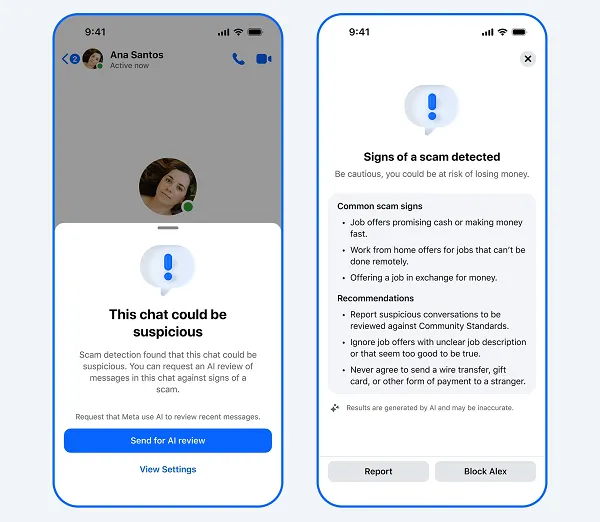
These additional features could help limit the impact of scam activities by giving users a chance to review their actions before approving connections and requests.
Meta also took part in its second Joint Disruption Week in Bangkok, which was led by the Royal Thai Police Anti-Cyber Scam Center, the FBI and the DOJ Scam Center Strike Force, along with other law enforcement agencies.
Joint Disruption Week activities allowed various investigative and enforcement groups to work together on known scam concerns and collaborate to address scam networks. Last December, at the first event of this type, the program led to the removal of more than 59,000 accounts, Pages, and Groups from Meta’s platforms. It also led to six arrest warrants.
This time around, as a result of the collaborative effort, Meta disabled more than 150,000 accounts associated with scam activity. The event also led to 21 arrests made by the Royal Thai Police.
Meta has been stepping up its enforcement of scam activity, with the platform looking to collaborate with various regional partners to break up scam operations and pursue legal means to punish offenders.
Over the past year, Meta has launched legal actions against illegal online gambling operations, data scraping projects, celeb-bait scammers and more.
Last month, Meta also reported that it had worked with law enforcement in the U.K. and Nigeria to help take down a scam center, which resulted in seven arrests.
These expanded actions will ideally work as a disincentive, demonstrating that there are severe consequences for online scam activity, and that regional barriers will not protect these groups from enforcement.
The fact that U.S.-based social platforms don’t have the resources or connections to chase down criminals in other regions has traditionally been a mitigating factor. But Meta is now forming stronger partnerships and undertaking precedent-setting legal actions, which will make it riskier for scammers to initiate such activities in future.