


Many development teams are adopting different approaches to improve how software is built, tested, and delivered. Agile and DevOps are among them. They support software developers and project managers in improving productivity, code quality, and collaboration.
Despite the shared goal, they’re inherently different. Agile focuses on iterative development and feedback-based improvements, while DevOps promotes a seamless collaboration between software developers and other IT professionals (e.g., QA engineers) to automate deployment. When combined properly, these approaches help your team speed up development cycles and enhance product quality.
Keep reading if you want to learn about their differences and how they work together.
What Is Agile?
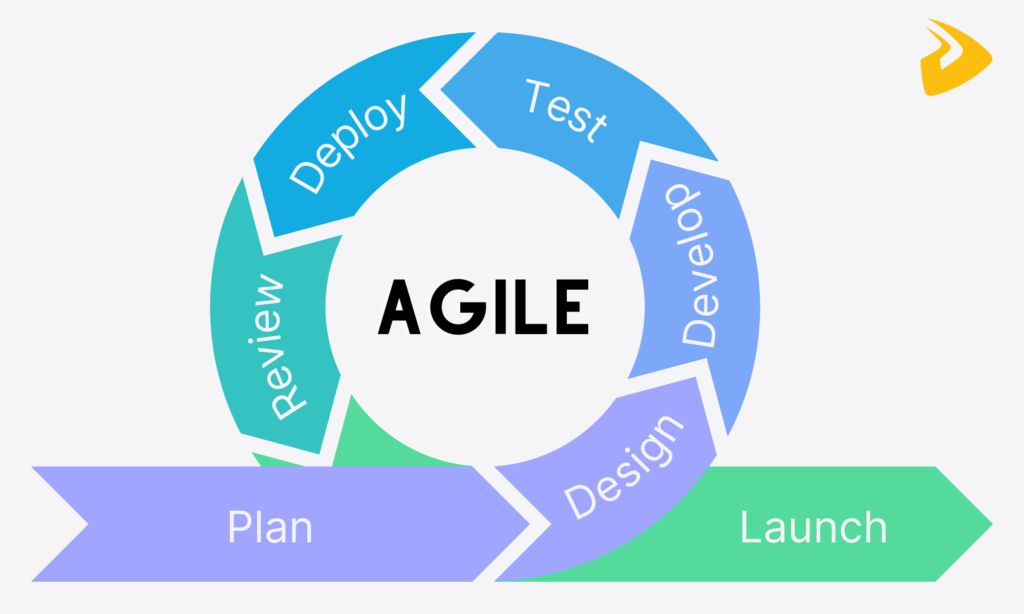
Agile is an approach to developing software via small, iterative cycles (often called “sprints”) rather than long, dependent development phases. Accordingly, Agile principles guide development teams to release working features in sprints. They test these features, gather feedback, improve, and then repeat the process.
The philosophy behind Agile was formalized in the Agile Manifesto. It emphasizes four core principles: individuals and interactions, working software, customer collaboration, and responsiveness to change. In practice, this means teams communicate frequently, adapt to shifting requirements, and focus on delivering value early and often.
Now, Agile itself isn’t a single method. In other words, it’s an umbrella that includes several frameworks such as SCRUM, Kanban, and Extreme Programming. Each one approaches Agile principles a little differently. SCRUM, for example, structures work into fixed-length sprints with defined roles, while Kanban focuses more on continuous workflow and visualizing tasks on boards.
In everyday development work, Agile keeps teams flexible, especially when project requirements change often or the initial requirements are unclear. Accordingly, Agile teams learn to adapt quickly, deliver updates more frequently, and keep improving the software.
What Is DevOps?
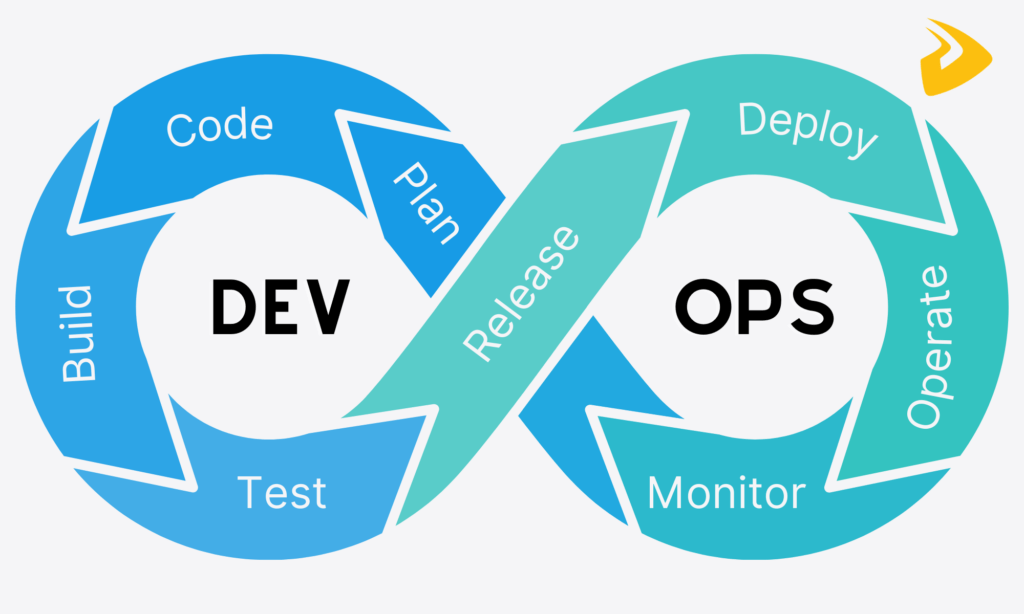
If Agile guides development teams to build software, DevOps focuses on handling tasks after developers write the code. By definition, DevOps is a set of practices that encourage developers and IT operations teams to work closely throughout the entire software lifecycle, from coding to deployment and maintenance.
In traditional development, developers write code and then hand it off to the operations team. After that, operations engineers will test, deploy, and maintain the code. This separation slows down and sometimes delays the entire development process.
But DevOps comes in to address this problem. Developers don’t just write code but also collaborate with operations engineers to handle testing environments, improve deployments, and monitor the software for later maintenance. Meanwhile, the operations team gets involved earlier in the software lifecycle to ensure the software works reliably.
One of the key ideas behind DevOps is automation. Instead of manually building, testing, and deploying software, teams will create automated pipelines – often based on practices such as Continuous Integration and Continuous Delivery. Accordingly, when new code is released, the teams can automatically test it, integrate it into the main codebase, and deploy it. This way, teams can release updates to production many times a day.
What Are The Differences and Similarities Between Agile And DevOps?
You may now understand what Agile and DevOps are. But do these approaches share any similarities, and in which points are they different? This section can help you answer these two questions:
Similarities Between Agile and DevOps
Agile and DevOps both streamline development workflows and boost productivity. Below are several shared ideas of these approaches:
Both approaches aim to shorten the time between writing code and delivering working features to target users. Agile supports this through short iterations, while DevOps uses automated pipelines – typically Continuous Integration and Continuous Delivery (CI/CD) – to speed up releases.
Both also help teams improve software continuously in different ways. Particularly, Agile teams often review their work through retrospectives, figure out what’s working well or what needs improvement, and adjust their work based on real feedback. Meanwhile, DevOps teams can continuously monitor the software’s performance, analyze incidents (e.g., bugs), and fine-tune CI/CD pipelines.
- Collaboration between teams
Agile and DevOps encourage collaboration. Accordingly, Agile helps developers, designers, and product owners work closely, while DevOps promotes collaboration between development and operations teams.
Differences Between Agile and DevOps
While they share similar goals, Agile and DevOps focus on different aspects of the development lifecycle. The table below will clarify these differences:
| Aspect | Agile | DevOps |
| Focus and objective | Focuses on iterative software development and responding quickly to changing requirements. The goal is to deliver working features in small, frequent increments. | Focuses on automating and improving the software delivery pipeline. The goal is to test, deploy, and maintain software reliably. |
| Team structure and skills | Typically smaller teams with roles like product owner, SCRUM master, and developers. Accordingly, developers need problem-solving skills, adaptability, and good communication to handle complex, changing tasks. | Often large-scale teams that involve not only developers but also operations engineers. DevOps often requires skills in infrastructure, automation, and monitoring. |
| Tools and automation | Uses project management and collaboration tools to manage tasks, backlogs, and sprint planning. | Relies heavily on automation tools for building, testing, deploying, and monitoring software. |
| Infrastructure management | Operations teams may separately handle infrastructure issues. Meanwhile, developers mainly build features. | Take responsibility for managing infrastructure through practices and tools like Infrastructure as Code. Accordingly, operations teams mainly focus on defining and managing environments. |
| Developer experience | Developers focus mainly on coding features and participating in sprint cycles. | Developers work closely with operations teams in software deployment, monitoring, and performance optimization. |
Agile vs DevOps: Which One Should Your Team Choose?

After understanding how different Agile and DevOps are, you now may ask: “Which one should my team adopt?” The answer depends on your specific situations. And below are when each approach works best:
Agile will be a better starting point when your team needs to handle unclear and changing requirements or struggles with long planning cycles.
In those situations, Agile frameworks such as SCRUM or Kanban can help organize work into smaller iterations. Accordingly, your team can deliver features incrementally, see how real users respond to those features, and adjust priorities. For this reason, the team can focus on the most crucial features that directly handle the existing pain point of target users and then enhance features to meet evolving requirements.
DevOps is an ideal option when your team needs regular releases, but the existing deployment process is slow and complex. For example, your team requires hours of manual configuration to release a new version or even a small update delays production.
That’s when you need DevOps, which focuses on automation and the close collaboration between development and operations teams. By using automated pipelines, both teams can release updates more reliably and frequently.
How Do Agile and DevOps Interrelate?
In practice, many organizations don’t treat Agile and DevOps as separate initiatives. Instead, the two approaches increasingly work side by side to bring the best outcomes: fast, yet high-quality deliveries.
According to the 18th State of Agile Report, more than half of organizations already connect Agile and DevOps tools seamlessly to reduce manual work when moving tasks or code between systems. At the same time, in 64% of surveyed organizations, this combination allows their Agile development teams to track how code moves through deployment stages, while operations teams have better insight into development planning and upcoming releases.
So what does this combination work exactly? Agile teams constantly build and refine software features through short iterations. They plan work in sprints, gather feedback, and keep expanding the software in small increments.
On the other hand, DevOps teams deliver those increments quickly to staging or production environments. Using automated pipelines, they accordingly test, package, and deploy every new piece of code without hassle. Additionally, they use monitoring tools to track how the features work in the real world. The data collected then flows back to the development team, defining the next sprint’s priorities.
In this way, Agile shapes what gets built, while DevOps speeds up how it reaches real users. Working together, both approaches create a continuous cycle of development and deployment to deliver reliable software faster without compromising quality.
Best Practices for Implementing Agile and DevOps Together
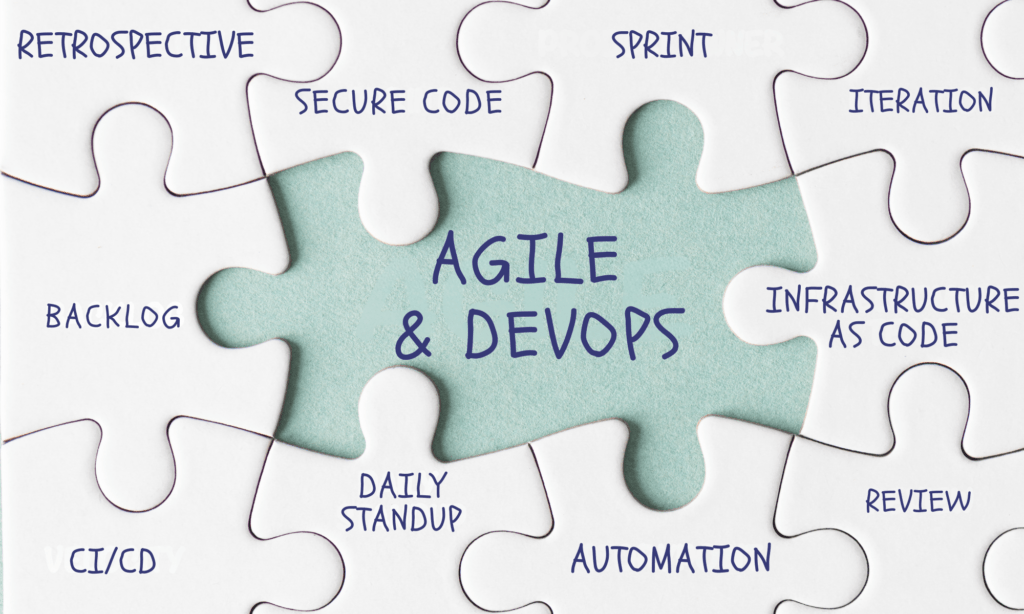
So, the question here is: How can you combine Agile and DevOps workflows effectively in software development? Here are some practices that help you:
- Encourage shared ownership across teams
Development and operations teams should work toward the same software outcomes rather than separate objectives. This means developers, testers, and operations engineers must collaborate throughout the entire lifecycle, from planning features to monitoring production systems.
- Build automated CI/CD pipelines early
Automated CI/CD pipelines help your teams test, integrate, and deploy new features (or code) automatically. By building these pipelines early, you can move sprint outputs quickly to production environments instead of waiting for manual testing or release preparation.
- Align sprint goals with deployment readiness
Your Agile team should aim to build features that are not only functional but also ready to deploy. Accordingly, even during development, the team should consider writing automated tests, maintaining stable builds, and ensuring infrastructure requirements instead of just writing code.
- Use monitoring and feedback loops
DevOps monitoring tools provide valuable insight into system performance, errors, and user behavior. By feeding this information back into Agile sprint planning, your Agile team can fix issues and prioritize improvements faster.
- Adopt infrastructure as code
Your teams can use Infrastructure as Code tools such as Terraform or Ansible to create and manage consistent production environments. These tools reduce configuration issues and support faster deployments for cloud-native software.
- Promote continuous learning and improvement
Through Agile retrospectives and DevOps incident reviews, both teams can identify workflow bottlenecks and adjust their delivery process. This way, they can improve collaboration and deliver better outcomes.
How Designveloper Helps You Build Effective Software Through Agile and DevOps Services

Adopting Agile and DevOps can significantly improve how your software is built and delivered. But in reality, implementing both approaches effectively isn’t always simple. Therefore, if you’re looking for Agile and DevOps managed services, why don’t you work with Designveloper?
By combining Agile workflows and DevOps deployment pipelines, Designveloper helps both startups and enterprises build scalable SaaS products. Our team accordingly supports you throughout the entire development lifecycle, from sprint planning and coding to fast deployment and updates. We integrate CI/CD practices early to ensure that each feature built in Agile sprints will be securely tested and quickly deployed.
Over the years, this approach has supported successful SaaS development. Accordingly, Designveloper has collaborated on the Lumin PDF project, a widely used document editing and antonating solution. Our team also built Swell & Switchboard, which helps solar companies manage their operations and workflows more efficiently.
Whether you want full-stack development or legacy software modernization, Designveloper has the right expertise and tools to get you covered. Reach out to us today and discuss your idea further!