


Agile methodology vs scrum is one of the most common questions in software development. Many teams use both terms as if they mean the same thing. However, they do not. Agile is the wider way of thinking. Scrum is one practical framework that applies that thinking to daily work. That difference matters because it shapes how a team plans, delivers, reviews, and improves. This guide explains each concept in clear terms, then compares them side by side. It also shows where they overlap, why both remain popular, and how to choose the right fit. Recent industry data still shows strong adoption, with 71% of survey takers use Agile in the SDLC, and 63% of Agile users are team Scrum. At the same time, leaders are also mixing delivery styles, with 73.8% project performance rate average across all respondents and a +57% increase in the use of hybrid approaches.

What Is Agile Methodology?
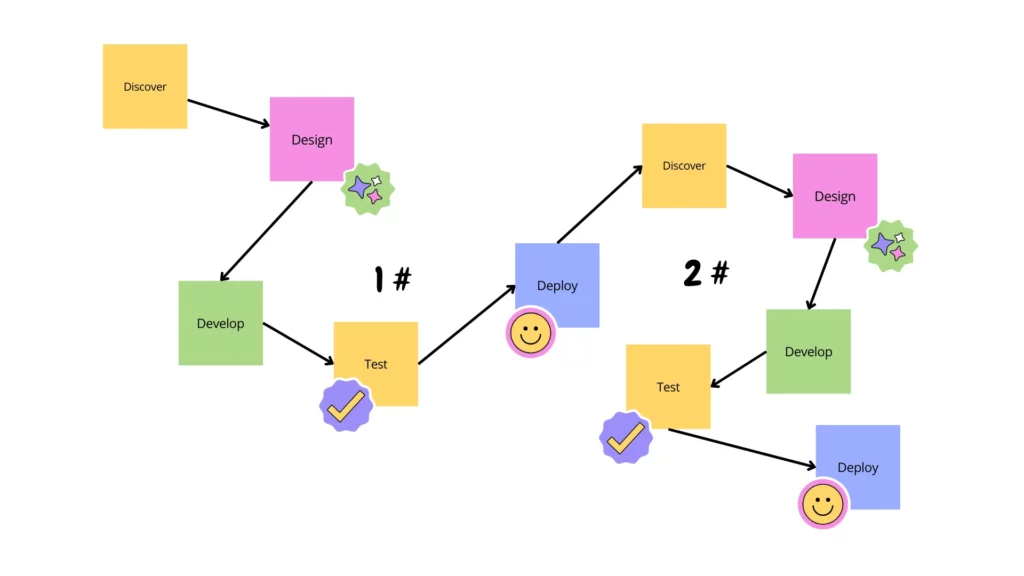
Agile methodology is a broad approach to building products in uncertain conditions. It does not give every team one fixed script. Instead, it gives principles that help teams respond to change, learn fast, and keep customer value at the center.
At its core, Agile values individuals and interactions, working software, customer collaboration, and responding to change. That is why Agile works well in modern software teams. Requirements shift. Customer needs evolve. Markets move fast. A rigid plan often breaks before the project ends.
Agile, therefore, asks teams to work in smaller cycles. They release useful work early. Then they learn from feedback and improve the next version. The related principles reinforce that idea because Agile favors early and continuous delivery, welcomes changing requirements, and asks teams to reflect and improve often.
That is also why Agile is better understood as a mindset than a strict method. In practice, Agile is best understood as a mindset and umbrella approach, not a single process. A team can follow Agile values through Scrum, Kanban, Extreme Programming, or a custom mix that fits its context.
So when people compare Agile methodology vs scrum, they are not comparing two equal-sized things. They are comparing a broad philosophy with one framework inside that philosophy. Once that becomes clear, the rest of the comparison gets much easier.
What Is Scrum Methodology?
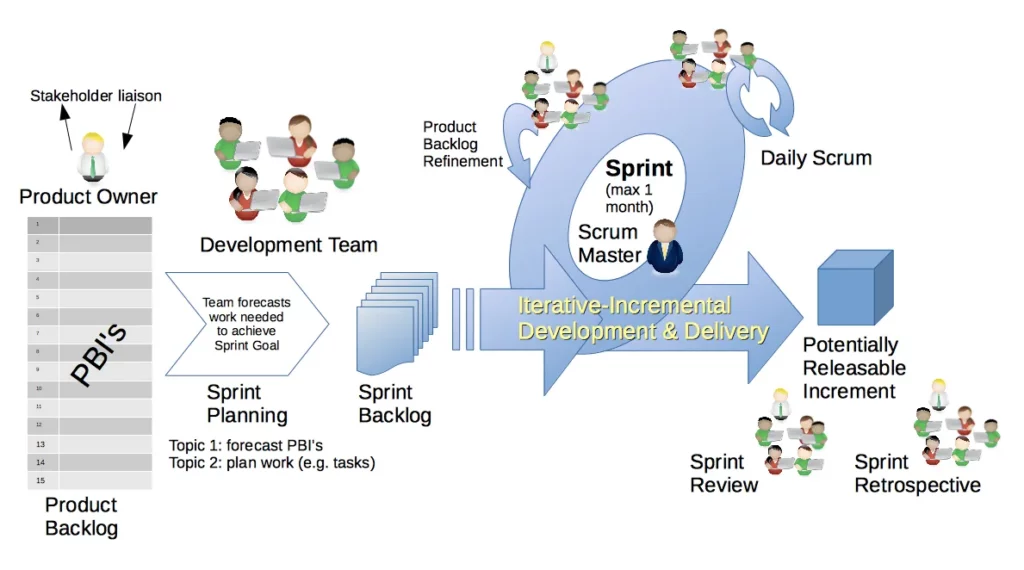
Scrum methodology is a structured way to apply Agile ideas. It gives teams a clear rhythm, clear roles, and clear events. That structure helps teams handle complex work without losing focus.
The official Scrum Guide describes Scrum as a practical framework for complex problems. In simple terms, Scrum is a lightweight framework built around a Product Owner, a Scrum Master, Developers, and Sprints of one month or less. That sentence explains why Scrum feels more concrete than Agile.
Scrum breaks work into short cycles called sprints. During each sprint, the team chooses a goal, works on a selected set of backlog items, and tries to create a usable increment. Then the team reviews results with stakeholders and reflects on how to improve the process before the next sprint starts.
Scrum also depends on empiricism. In other words, teams make decisions based on what they observe, not on perfect predictions. They inspect progress often. They adapt quickly. They keep transparency high. Because of that, Scrum works best when the work is complex, the solution is not fully known at the start, and the team needs frequent learning loops.
Still, Scrum is not the whole Agile world. It is one Agile framework. Teams can be Agile without Scrum, and teams can use Scrum poorly if they follow the meetings but ignore the mindset behind them.
The Differences Between Agile Vs Scrum
The main difference between Agile methodology and Scrum is simple. Agile explains the mindset. Scrum explains one way to work inside that mindset. As Atlassian puts it, Agile is a set of principles for iterative and collaborative software development, while Scrum is a specific framework that implements Agile values through defined roles, events, and artifacts.
| Aspect | Agile | Scrum |
|---|---|---|
| Nature | Mindset and umbrella approach | Framework inside Agile |
| Structure | Flexible and adaptable | Defined roles, events, and artifacts |
| Cadence | May use flow, iterations, or mixed models | Uses time-boxed sprints |
| Roles | No fixed role names required | Product Owner, Scrum Master, Developers |
| Planning | Can vary by team and framework | Uses sprint planning, review, and retrospective |
1. Mindset vs Framework
Agile is the bigger idea. It tells teams what to value. It encourages quick learning, customer feedback, and adaptation. It does not say every team must use the same meetings, documents, or role titles.
Scrum is narrower. It takes Agile values and turns them into a repeatable operating model. That is why Scrum feels more specific. It tells teams how to organize work, when to inspect progress, and who owns which decisions.
So Agile answers the question “How should we think?” Scrum answers the question “How should we run the work week by week?”
2. Flexibility vs Defined Structure
Agile gives teams room to adapt the process. A team may use Kanban boards, weekly releases, user story mapping, or discovery workshops. Another team may use a different mix. Both can still be Agile if they follow the values and principles.
Scrum gives less room at the framework level. That is not a weakness. It is the point. The structure makes problems visible. If priorities are unclear, sprint planning exposes it. If work stalls, the daily scrum exposes it. If stakeholders disagree on value, the sprint review exposes it.
Because of that, Scrum often helps teams that need more operating discipline. Agile helps teams that already have strong delivery habits and want more freedom in how they work.
3. Continuous Delivery vs Time-Boxed Sprints
Agile can support many delivery cadences. Some Agile teams work in continuous flow. Others use short iterations. Some combine both. The goal is not to protect one format. The goal is to deliver value often and learn from real feedback.
Scrum always works through time-boxed sprints. That sprint cadence creates focus. It also creates a clear moment for review and adaptation. The sprint is not the same as a release plan, though. A Scrum team can still release during the sprint if the product is ready.
That makes the comparison more precise. Agile methodology vs scrum cares most about fast feedback and adaptability. Scrum cares about fast feedback too, but it gets there through a regular sprint rhythm.
4. Team Roles and Responsibilities
Agile does not force one fixed role model. It needs cross-functional teamwork and shared ownership, but teams can shape roles differently based on context.
Scrum is more explicit. In Scrum, a Scrum team consists of three core roles: Product Owner, Scrum Master, and Development Team, each with distinct responsibilities. The Product Owner owns value and backlog priority. The Scrum Master supports the process and removes blockers. Developers build the increment.
This role clarity often helps growing product teams. It reduces confusion. It also makes trade-offs faster because someone owns priority, someone protects the framework, and the team owns delivery.
5. Planning, Workflow, and Change Management
Agile planning can take many forms. Teams may plan by quarter, by release, by workflow stage, or by customer outcome. They may also re-prioritize continuously. That makes Agile useful for environments where work arrives in uneven ways.
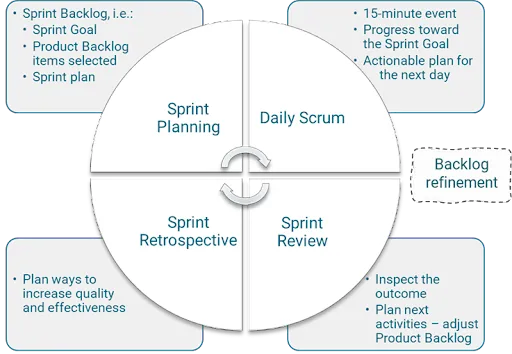
Scrum uses a tighter planning cycle. Sprint planning sets the goal and selects work. The daily scrum checks progress. The sprint review gathers stakeholder feedback. The retrospective improves the way the team works. Even then, Scrum does not ban learning during the sprint. According to the official guide, scope may be clarified and renegotiated with the Product Owner as more is learned.
This is an important point in agile methodology vs scrum. Agile often treats change as a constant flow. Scrum treats change as welcome, but channels it through sprint goals and backlog decisions so the team does not lose focus every day.
The Similarities Between Agile Vs Scrum
Agile methodology vs Scrum are different, but they share the same foundation. Scrum did not appear outside Agile. It grew from the same need to manage uncertainty, speed up learning, and keep product value in view.
1. Iterative Delivery
Both Agile and Scrum avoid the “build everything first, validate later” trap. They encourage teams to break work into smaller parts and deliver value in stages. That reduces risk because teams learn earlier.
This matters in real projects. A smaller release exposes design issues faster. It also shows whether the team solved the right problem before too much time and budget disappear.
2. Customer Collaboration and Feedback
Both approaches put customer input close to the work. Teams do not wait until the very end to learn what users think. Instead, they seek feedback throughout delivery.
That habit improves product direction. It also helps teams avoid false certainty. When customers react early, teams can refine features, shift priorities, or stop low-value work sooner.
3. Continuous Improvement
Both Agile and Scrum assume that no team gets the process perfect on day one. Teams improve through regular reflection. They inspect what happened. Then they adapt.
In Agile, that improvement may happen through reviews, metrics, coaching, or workflow changes. In Scrum, the retrospective makes that improvement loop more formal. The goal is the same in both cases. Teams should not just ship work. They should also get better at shipping work.
4. Cross-Functional Teamwork
Both approaches work best when teams can solve problems without waiting on too many handoffs. Designers, engineers, testers, product people, and business stakeholders need shared context and fast communication.
That is one reason these models improve speed. When the people who define value and the people who build value work closely, decisions happen faster and quality usually improves.
Benefits of Agile and Scrum
Teams still adopt Agile and Scrum because the benefits are practical, not theoretical. A recent industry summary from Digital.ai noted that almost 60% said collaboration has improved, while 57% saw better alignment to business needs. Those two gains explain why both approaches keep showing up in product organizations.
1. Faster Delivery
Both Agile and Scrum shorten the path from idea to usable software. They do that by reducing batch size, increasing feedback frequency, and keeping teams focused on valuable increments.
Scrum often speeds delivery through sprint goals and better team focus. Broader Agile approaches can speed delivery through continuous flow, automation, and rapid reprioritization. The mechanism differs, but the result is often the same. Teams ship sooner and learn sooner.
2. Better Adaptability to Change
Change is not an exception in software work. It is the default. Customer needs shift. Competitors move. Technical risks surface. Both Agile and Scrum help teams respond without losing the whole plan.
Agile supports this through flexible planning and fast learning loops. Scrum supports it through inspection, adaptation, and a living backlog. That makes both useful in product environments where certainty is low at the start.
3. Stronger Team Collaboration
These approaches force useful conversations. Teams talk about goals, blockers, priorities, and outcomes more often. That reduces silent confusion, which is one of the biggest causes of delivery friction.
Scrum supports collaboration through regular events and role clarity. Agile supports collaboration through shared ownership and shorter communication lines. In both cases, teams spend less time guessing and more time solving.
4. More Transparency and Feedback
Agile and Scrum make work visible. Backlogs, boards, sprint goals, reviews, demos, and metrics all help stakeholders see what is happening now, not just what was promised months ago.
That visibility improves trust. It also helps leaders make better trade-offs. When progress and risk are visible, teams can ask better questions about scope, timing, and value.
When to Use Agile vs Scrum

There is no universal winner in agile methodology vs scrum. The right choice depends on the shape of the work, the maturity of the team, and how much structure the organization needs.
1. When Agile Is a Better Fit
Agile is a better fit when the team needs flexibility more than ceremony. This often happens in broad product environments where discovery, design, engineering, support, and operations all move at different speeds.
Choose a broader Agile approach when:
- the team wants to mix methods such as Kanban, discovery practices, and DevOps,
- work arrives in a continuous flow instead of neat sprint-sized batches,
- several teams need different ways of working under one shared value system,
- the organization wants Agile principles without forcing every team into the same meetings.
This path works well for mature teams. They already know how to collaborate and inspect progress. They do not need a strong framework to create discipline.
2. When Scrum Is a Better Fit
Scrum is a better fit when a team needs more structure. That is common in new product teams, cross-functional delivery teams, or organizations trying to move away from ad hoc execution.
Choose Scrum when:
- the team is building a product with complex, changing requirements,
- the team needs a regular planning and review cadence,
- leaders want clearer ownership for priorities and process support,
- the team benefits from fixed-length focus periods instead of constant interruption.
Scrum often helps teams that say, “We know we should be Agile, but our work still feels chaotic.” The framework gives them a repeatable way to work, learn, and improve.
3. When Scrum Works Best Within a Broader Agile Approach
This is often the most realistic answer. Many organizations do not choose Agile or Scrum as if only one can exist. They use Agile as the overall philosophy and Scrum as the team-level framework where it fits best.
That mixed model is common because 42% of respondents report their organizations use a hybrid model that includes Agile, DevOps, or other choices. In practice, a company might use Agile principles across product strategy, customer research, and release planning, while individual software teams run Scrum sprints.
This combination works well because Agile keeps the organization adaptable, while Scrum gives delivery teams a stable operating rhythm.
Agile vs Scrum Examples

Real examples make the difference easier to see.
First, broad Agile delivery often appears at the service level, not just inside one team. For example, GOV.UK organizes agile service delivery around discovery, alpha, beta, live, and retirement. That is a wider operating model. It shows how Agile can guide planning, testing, launch, and service evolution without requiring every team to use the same exact framework.
Second, Scrum often appears when an organization wants stronger delivery discipline at team level. In one transformation case, Vodafone New Zealand created 55 squads and introduced roles such as Product Owners, Scrum Masters, and Agile Coaches. That example shows Scrum-style team structure inside a larger Agile change effort.
Third, large enterprises also use Scrum at scale when they want repeatable coordination across many teams. Scrum.org highlights Akbank’s transformation to 100+ Scrum Teams. That is a strong example of Scrum as a structured scaling choice, not just a small-team tactic.
A simple software example also helps. Imagine a startup building a new SaaS product. If the team needs strong delivery cadence, sprint reviews, and backlog discipline, Scrum is a smart fit. Now imagine a platform team that handles bugs, infrastructure work, urgent requests, and ongoing improvements every day. That team may still stay Agile, but it may prefer Kanban or another flow-based system over Scrum.
FAQs About Agile And Scru
This search phrase usually means the reader wants the short answer fast. Here it is. Agile is the wider philosophy. Scrum is one framework inside that philosophy. The better question is not which one is “better” in general. The better question is which one fits the work, the team, and the level of structure needed right now.
FAQs About Agile vs Scrum
1. Is Scrum the Same as Agile?
No. Scrum is not the same as Agile. Agile is the broader mindset. Scrum is one method for applying that mindset. Every Scrum team should be Agile in spirit. However, not every Agile team needs to use Scrum.
2. Can a Team Be Agile Without Scrum?
Yes. A team can be Agile without Scrum if it still follows Agile values and principles. Many teams use Kanban, lean product methods, DevOps practices, or custom workflows. They can still be Agile if they deliver iteratively, seek feedback, collaborate closely, and adapt to change.
The key test is not whether the team runs sprint planning. The key test is whether the team learns fast, delivers value often, and improves its process over time.
3. Can a Team Use Scrum Without Being Truly Agile?
Yes. This happens more often than many leaders expect. A team can run the ceremonies, fill out the board, and still miss the real point. Scrum without learning, collaboration, or adaptation becomes theater.
A useful case from Scrum.org shows this clearly. Intralinks first used a mechanical version of Scrum and struggled. Later, the company improved when it moved beyond a mechanical implementation of Scrum and reinforced inspection, adaptation, and the Scrum Values. That example makes the lesson clear. Scrum works best when the team lives the mindset, not when it only copies the meetings.
Agile methodology vs Scrum is not a battle between two opposing systems. It is a question of level. Agile gives the values and direction. Scrum gives one disciplined way to turn those values into day-to-day execution. Therefore, the best choice depends on the work in front of the team. If the team needs freedom and can already manage flow well, a broader Agile approach may fit better. If the team needs clarity, cadence, and role definition, Scrum may be the better starting point. And for many organizations, the strongest answer is both together: Agile as the mindset, Scrum as the operating model where it adds the most value.
If a company is planning a software product and needs help choosing the right delivery model, Designveloper can assess the product scope, team setup, release cadence, and collaboration needs before development starts. That makes the agile methodology vs scrum decision much more practical, and much less confusing.
Conclusion
Agile methodology vs Scrum should never be a theory-first choice. It should be a business-first one. The right model depends on your product goals, team maturity, release pace, and how much structure your workflow needs. At Designveloper, we use that practical view in every engagement. We were founded in 2013, and our company presents itself as a leading software development company in Ho Chi Minh City, Vietnam with services in AI, web app development, mobile app development, and UI/UX design, alongside custom software development and VoIP app development. Because of that range, we can help clients choose a broader Agile operating model, a Scrum-based team structure, or a mix of both that matches the real shape of the work.
That matters even more when products grow fast. We have built and supported digital products across SaaS, AI, healthcare, media, construction, and finance, including Lumin, Song Nhi, WorkPacks, and HANOI ON. Our projects page also highlights 13 years of expertise, which reflects the depth we bring to delivery planning, cross-functional collaboration, and long-term product execution. So, if you are deciding between Agile and Scrum for your next software initiative, we can help you turn that choice into a delivery system that fits your product, your people, and your growth goals.