


In what may be one of the best examples of the conflicts artificial intelligence tools create for social media platforms, LinkedIn has shared an update on the new measures it’s implementing to combat AI overuse, and police misrepresentations in its feed.
In a Wednesday post in the app, LinkedIn Global Editorial VP Laura Lorenzetti shared the latest measures the app is undertaking to combat the rise of AI content and profiles, including:
- Restrictions on the reach of content that appears to be generated by AI and lacks clear perspective
- New measures to detect and limit the reach of automated and AI-generated comments, which LinkedIn has been working to combat for some time
- Additional filters so users can limit their results to content from verified profiles only, which helps to address issues with a rise in AI bot generated profiles in the app
These expanded measures, Lorenzetti said, can help to curb the presence of AI-generated junk that crowds out insights from real, human users.
As per Lorenzetti: “When AI is overused, especially at scale and in an automated way, it dilutes the valuable insights that real human conversations can spark. It’s ok to use AI to help you write, but your posts and comments need to represent your voice and your perspectives. The ultimate value comes from the human behind the tool.”
LinkedIn’s stance here makes sense. However, it’s worth noting that LinkedIn has added AI assistant tools into every element of the app, including profile creation, post generation, job applications and candidate vetting.
So on one hand, LinkedIn is encouraging the use of AI and making it easier than ever to do. Yet the platform is also trying to dictate how people can use these tools, with restrictions on AI overuse.
This is a paradox that seemingly all social apps are now facing.
The problem with AI tools is that they’re designed to be assistive, and to help users with prompts and ideas designed to complement their original thoughts. But for many people, AI is used for more than that.
Because while people can use an AI chatbot to give them ideas, they can also use the same tool to do all the work for them. So why would somebody spend time and brain power writing a LinkedIn thought leadership post, when they can just ask ChatGPT, or LinkedIn’s own internal tool, to create one for them, which could be more aligned to a style that’s likely to generate the most engagement?
While AI tools are supposed to help rather than take on all the workload, a lot of people are inherently lazy. If they can reduce manual work by just asking some bot to do it, they will.
And LinkedIn has essentially encouraged this, with prompts to “Rewrite with AI” added directly in the composer.
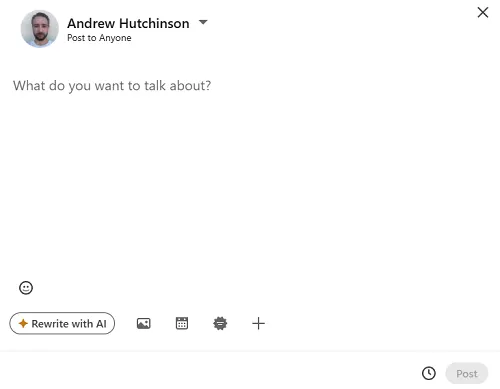
As such, it’s a bit rich for LinkedIn to also now be telling people that they can’t use AI for everything, since the platform has been delivering the exact opposite message via a steady influx of AI tools in the app.
While LinkedIn’s AI crackdown makes sense, it represents a dichotomy of approaches, with the app looking to promote AI use on one hand, and limit it on the other.
As the big tech firms that own social platforms continue to invest in AI tools, this conflicted approach will continue to spark mixed messaging. Users will have the option to easily generate AI content, but will be advised not to.