


LinkedIn is expanding access to its AI-powered job search tools to more languages, with Spanish, German, French and Portuguese-speaking users now able to utilize the platform’s advanced AI job assistant features.
Originally launched in May last year, LinkedIn’s AI-powered job search process enables users to describe their dream job in basic terms, which LinkedIn’s system is then able to match to actual roles and opportunities.
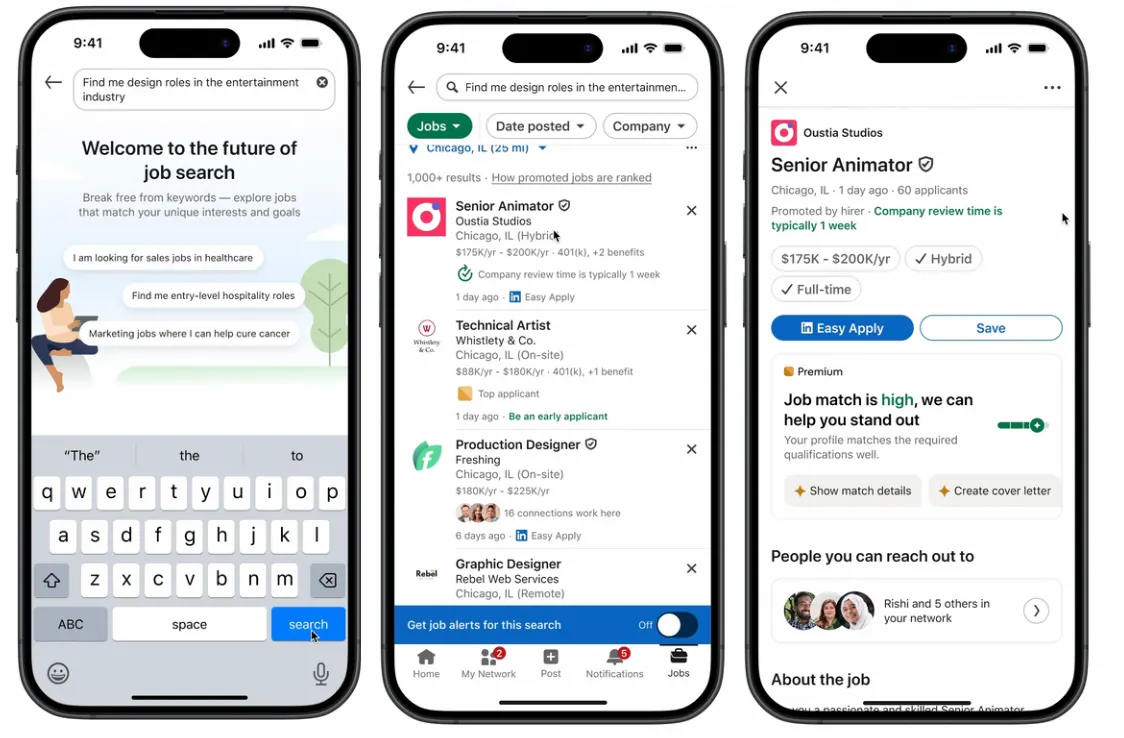
As you can see in this sequence, based on conversational queries (like “find me design roles in the entertainment industry”), LinkedIn members can now search for job matches that align with what exactly they’re after, even if they don’t know the technical industry terms or specifics.
LinkedIn says that this process more closely mirrors a discussion with a career advisor, enabling users to get more accurate, valuable search results, via a simplified discovery process.
And it’s already proven popular:
“More than 1.3 million LinkedIn members are already using this AI-powered job search daily, with over 25 million searches conducted every week.”
And now, even more LinkedIn users will be able to access these options.
As explained by LinkedIn’s VP or Product Engineering Erran Berger:
“In the past, searching for jobs often meant guessing the right keywords, navigating rigid filters, and hoping the perfect role would show up. With AI-powered job search, we’ve turned this model upside down. Now, our system adapts to you and helps you uncover opportunities and relevant roles you might have never known to look for, helping you advance in your career.”
Berger says that much work has gone into ensuring the system works across languages and borders, based on varying cultural understanding, and different uses of professional terms to describe job roles.
And now, more people will be able to access it, adding to the expanding array of AI tools available in the app.
Indeed, LinkedIn now offers AI posting prompts, profile summaries, application letter assistance, and more.
Which, in some ways, is good, as it can be hard to know what exactly you’re supposed to say, and having an assistant tool for such will help more people get interviews. But at the same time, it could also be misleading, and make it much harder for HR teams to sort through candidates, based on initial, AI-generated outreach.
But LinkedIn is owned by Microsoft, and Microsoft is paying billions to partner with OpenAI, so you can bet that it’s going to look to pump AI into every element of every app and tool it has to maximize that investment.
Some of these tools will be helpful, some are going to cause more harm and annoyance, though I maintain that AI assistance tools should be limited on LinkedIn, so that it remains, as best can be, a representation of each person’s actual professional skills and insight.