

Are you a startup looking for the best healthcare app ideas to stay competitive in this era? If so, you’ve come to the right place. Here, we’ll provide you with a curated list of innovative ideas to build a healthcare app that meets people’s demands and achieves success. Keep reading and discover which idea best suits your business!
Why Healthcare App Ideas Are Ideal for Startups Today
Coming up with a healthcare app idea may help your startup win a slot in this competitive era. But why? Here are three visible reasons:
- The increasing demand for personal healthcare
People aren’t passive about their health anymore. They want some tools to track, monitor, and manage health issues when even subtle symptoms show up, not three months after they’ve gotten worse.
- The explosion of AI, telehealth, and remote care
AI is being used to solve real problems, like supporting surgery (through AI-powered robots), diagnostic trials, nursing, and even administrative workflows. For this reason, AI in healthcare is expected to reach a global value of over $56 billion in 2026, which continues to grow by a whopping 44% annually in the upcoming years.
Along with AI is the non-stop growth of telehealth, which was fuelled by the COVID-19 pandemic in 2019. Now, the demand for remote care and patient monitoring is still rocketing. People realize that it’s a routine way to connect with doctors, especially for those who can’t easily get to a clinic.
- Big opportunities in preventive care, mental Health, women’s health, and aging populations
Those healthcare niches open more avenues for startups to build useful and life-changing apps.
For preventive care, people are slowly moving from a healthcare system that reacts to sickness to one that tries to prevent it. This shift welcomes apps that help people stay healthy before they get sick.
Mental health has also exploded because people are expecting some apps to handle their stress, anxiety, mood tracking, and even virtual counseling.
Women themselves have unique health needs, like tracking menstrual cycles and getting menopause support.
Meanwhile, older folks usually have multiple health concerns requiring constant monitoring. Healthcare apps, from fall detection to medication reminders, can improve the quality of healthcare.
Top 17 Innovative Healthcare App Ideas for Startups
Now, let’s learn about the best 17 healthcare app ideas that your startup may consider to achieve big success in this era:
1. Mental Health AI Companion for Gen Z
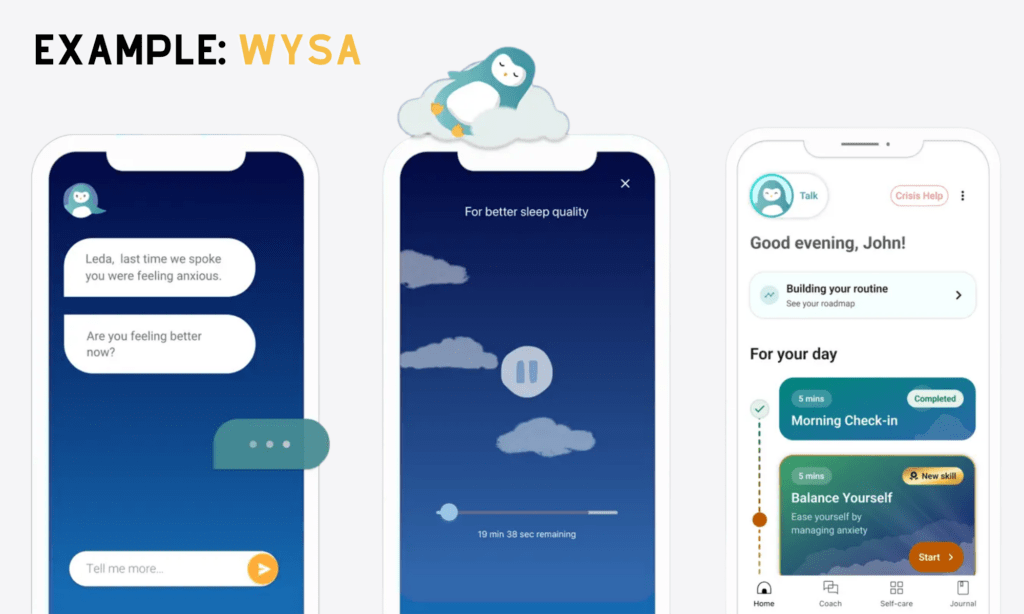
Research has shown that up to 94% of Gen Z in California are struggling with mental health issues. These health problems come from many reasons, such as housing rents, job finding, gun violence, climate change, and even discrimination.
Another UNICEF report stated that four in ten of Gen Z needed help with their mental health issues. But access to therapists is still limited, expensive, or just intimidating for many young people.
What Gen Z has, though, is their phone. And they’re comfortable typing feelings into a chat window even at 2 a.m. That’s where a mental health AI companion fits in.
This chat-first, always-available app feels like a private space to check in with Gen Z themselves. But it’s not replacing therapy. It’s just acting as a first step when people aren’t ready to talk to a human yet.
Some features to include:
- Real-time mood tracking using short check-ins or passive signals like typing patterns and activity levels
- AI chat companion that responds conversationally, not clinically
- Stress or anxiety alerts when patterns change suddenly
- Daily or weekly mental health summaries written in simple, non-judgmental language
- Optional escalation to human support or professional resources when risk signals appear
Challenges when building this app:
- Trust: Mental health is sensitive, and users will abandon your app fast if responses feel robotic, cold, or unsafe.
- Ethical side: AI must avoid giving harmful advice or crossing into diagnosis territory.
- Privacy: If Gen Z feels their data is being “watched” instead of protected, they’re gone instantly.
2. Post-Surgery Recovery Tracking App
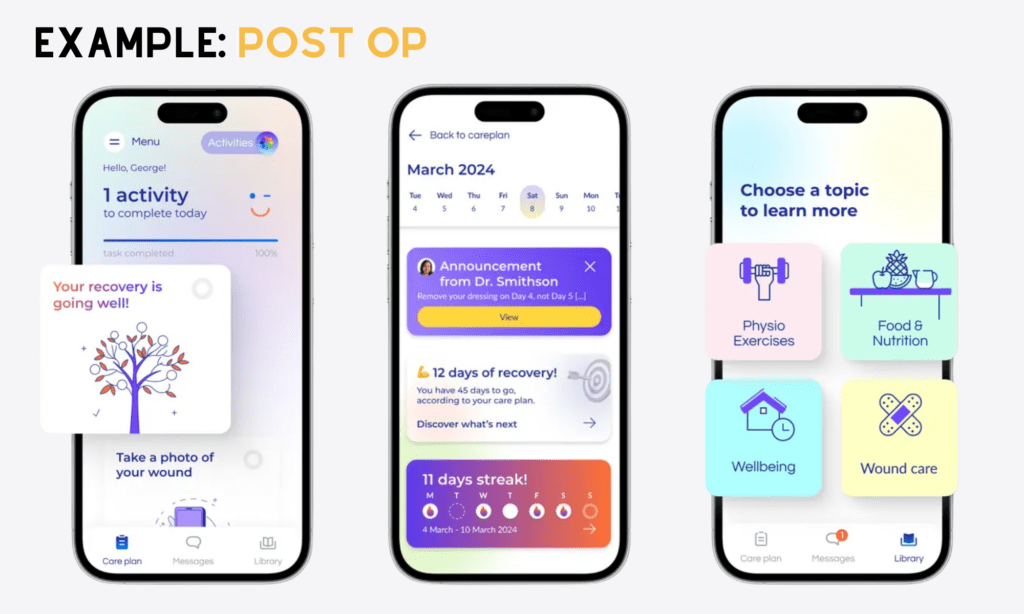
Recovery, in many cases, happens at home with minimal supervision. This leaves patients guessing: “Is this pain normal? Am I doing these exercises right? Did I miss a pill?”
Therefore, they need a post-surgery recovery app as a guide when medical staff are no longer physically present. Meanwhile, this app idea helps healthcare providers to track the recovery progress of their patients and reduces unnecessary readmissions caused by missed warning signs or wrong exercises.
Some features to include:
- Personalized recovery timeline based on surgery type
- Medication reminders with dosage tracking
- Guided exercise videos approved by clinicians
- Symptom logging with visual comparisons (“today vs yesterday”)
- Alerts for abnormal signs like swelling, fever, or pain spikes
Challenges when building this app:
- Medical accuracy: Every recommendation needs clinical validation, which slows development.
- Complex integration with hospital systems: The app needs to connect smoothly with complex hospital systems to sync data.
- User behavior: Patients may sometimes ignore reminders or underreport symptoms.
3. Elderly Care Networking Platform
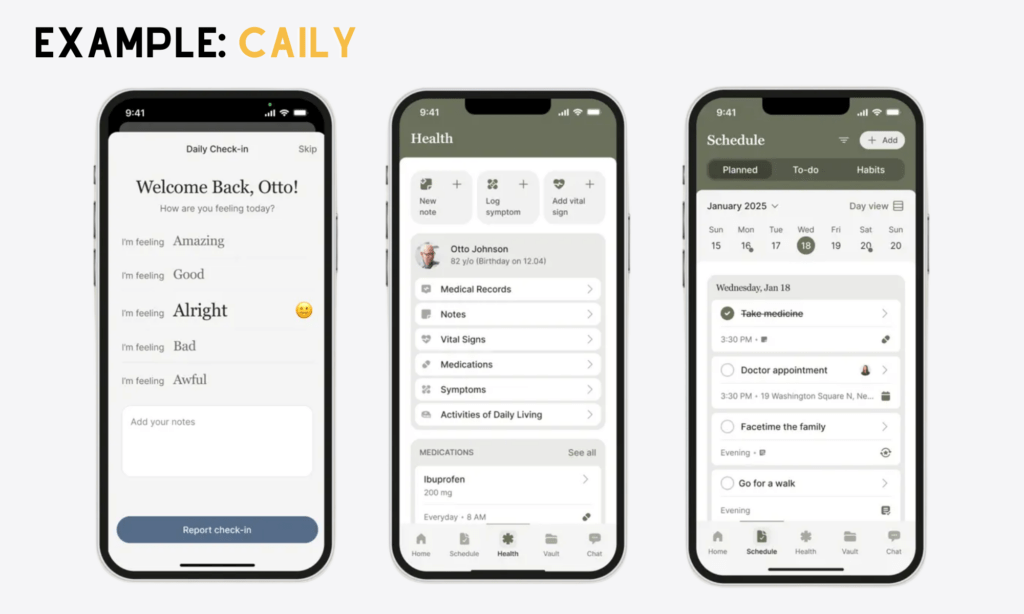
The global population is aging very fast. And many elderly people live alone or far from family. So, what they often lack is prompt medical care.
An elderly care networking platform combines healthcare access with social and caregiving support. It offers a unified place for seniors, caregivers, healthcare providers, and even neighbors to stay connected.
Some features to include:
- Caregiver and family dashboards with real-time updates
- Appointment scheduling and telehealth access
- Medication and routine reminders designed for low digital literacy
- Community groups or interest-based social spaces
- Emergency alerts with location sharing
Challenges when building this app:
- Adoption: Elderly users may struggle with complex interfaces, so UX must be simple.
- Coordination: It’s hard to balance input from family members, caregivers, and professionals without overwhelming the user.
4. IVF and Fertility Navigator App
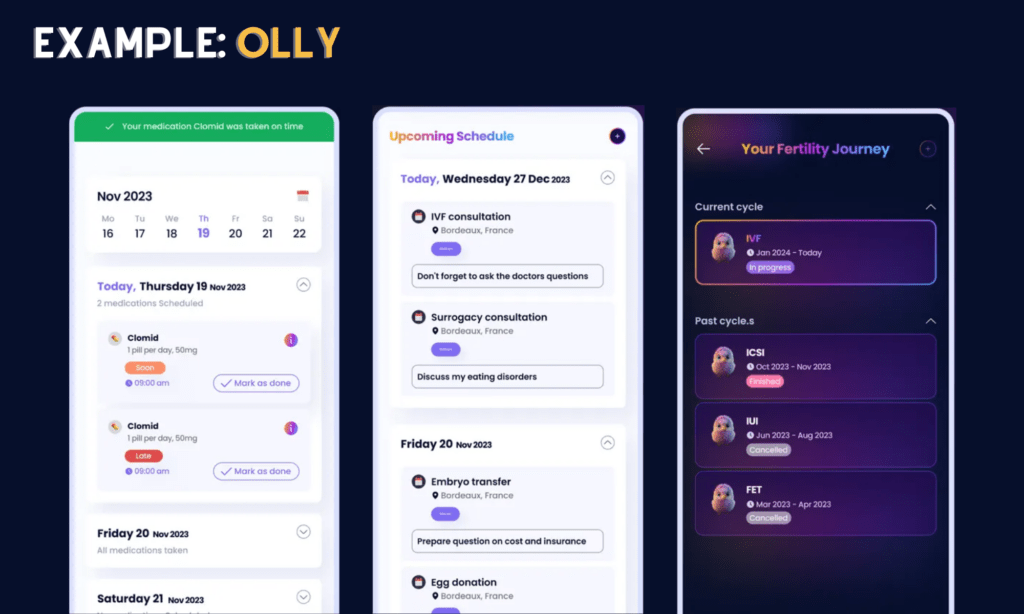
According to the WHO, around one in six people is experiencing infertility in their reproductive age. That’s why assisted technologies like IVF (In Vitro Fertilisation) are born and help couples to have their own babies.
However, IVF is emotionally exhausting and physically demanding. Couples often juggle hormone schedules, clinic visits, lab results, and constant uncertainty. Yet much of this process is still managed through spreadsheets, paper notes, or memory. That makes people more stressed.
So, a fertility navigator app acts like a calm assistant in this case. It simply organizes chaos to reduce anxiety and mistakes.
Some features to include:
- IVF cycle tracking with clear phase explanations
- Hormone and medication schedules with alerts
- Secure storage for lab results and treatment notes
- AI-based reminders and next-step suggestions
- Shared access for both partners and clinicians
Challenges when building this app:
- Language handling: Fertility is deeply personal. If the app feels too technical or too optimistic, it can backfire on patients. So, medical terminology needs translation into plain language without losing accuracy.
- Differences in regional treatment: Some couples implement IVF treatment in other countries where standards and processes may be different. So, building a standardized app for all IVF treatment processes is hard.
5. Perimenopause Wellness Management App
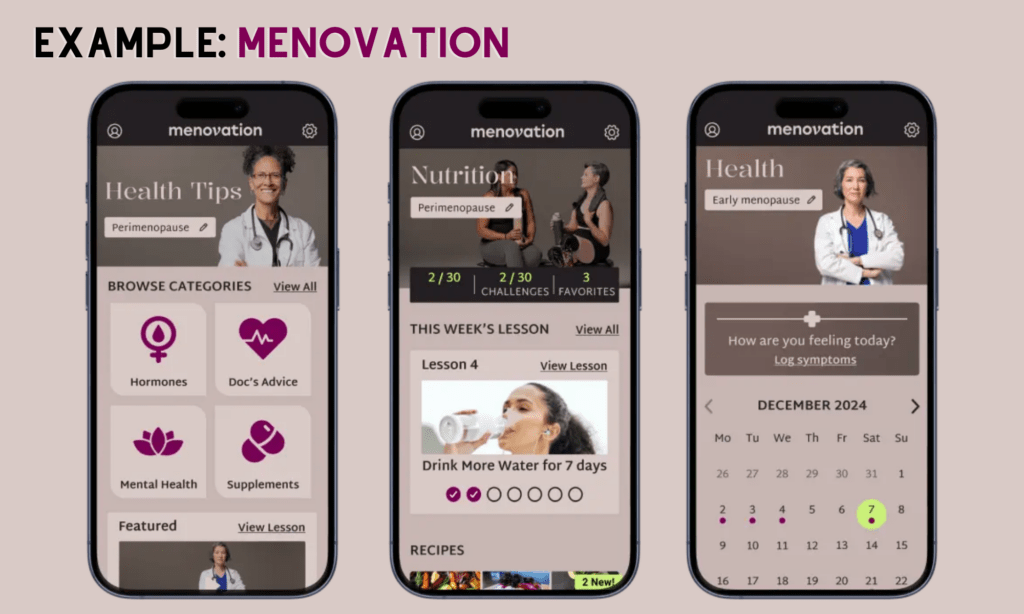
Perimenopause is one of those health phases that affects millions of women. During this period, women often face various symptoms, like hot flashes & night sweats, energy loss, mood changes, and sleep issues. Without proper management, their quality of life may decrease a lot.
So, they need an app to manage their perimenopause wellness. As women seek more personalized health solutions, this niche is growing faster than many already saturated healthcare segments.
Some features to include:
- Symptom tracking for sleep, mood, energy, and cycles
- Personalized nutrition and lifestyle recommendations
- Educational content written in plain, empathetic language
- Trend analysis showing how symptoms evolve over time
- Optional clinician-sharing features for consultations
Challenges when building this app:
- Complex personalization: Symptoms vary wildly between individuals, so personalization is complex.
- Data shortage: Compared to other health segments, this niche lacks standardized data. This makes AI training harder.
6. Pregnancy Nutrition AI App
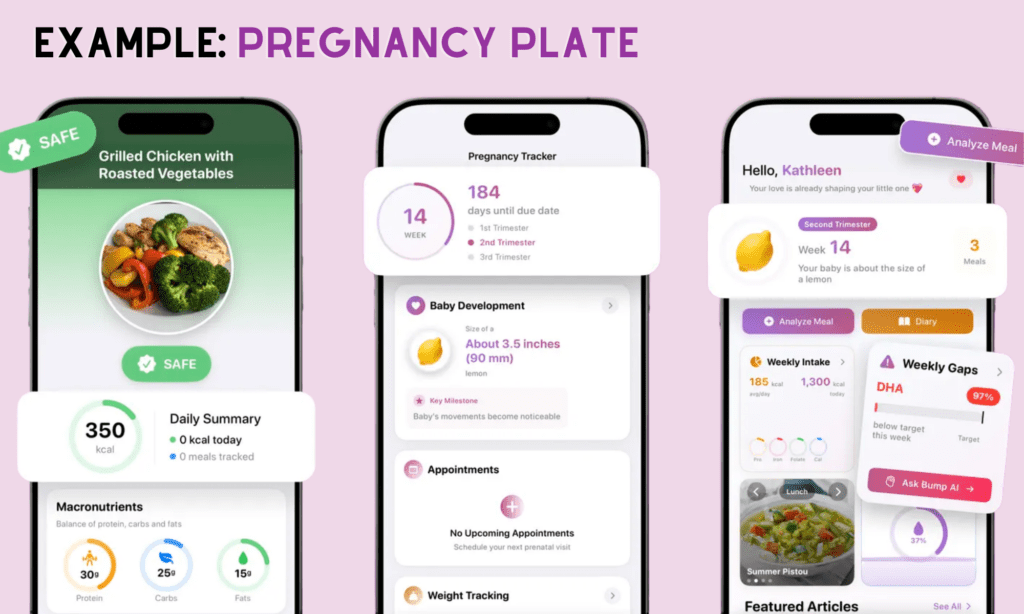
Pregnancy is one of the important life stages for women. During this period, women need regular medical care, proper lifestyles, and especially suitable nutrition to support mothers and the developing fetuses.
But not all the time, they can know whether all the food they buy contains healthy ingredients. So, why don’t you build a pregnancy nutrition AI app to help them with that. This healthcare app idea also gives them sound advice validated by doctors about what to eat, how much, and when for different stages of fetal development.
Some features to include:
- AI-powered food label scanning with pregnancy-safe indicators
- Weekly nutrition goals aligned with trimester-specific needs
- Menu suggestions that adapt to nausea, cravings, or dietary limits
- Alerts for ingredients that should be limited or avoided
- Simple explanations of why certain nutrients matter at each stage
Challenges when building this app:
- Accuracy: Nutritional guidance must stay aligned with medical standards, which can vary by region. And food databases also need constant updates to ensure every nutrient advice for expectant mothers is proper.
- High personalization: Each pregnant woman has their own diet. So AI must be flexible with each user’s input (symptoms, fetal development stages, etc.) to suggest the right menu and nutrients.
7. Healthcare Marketplace App Connecting Patients and Providers
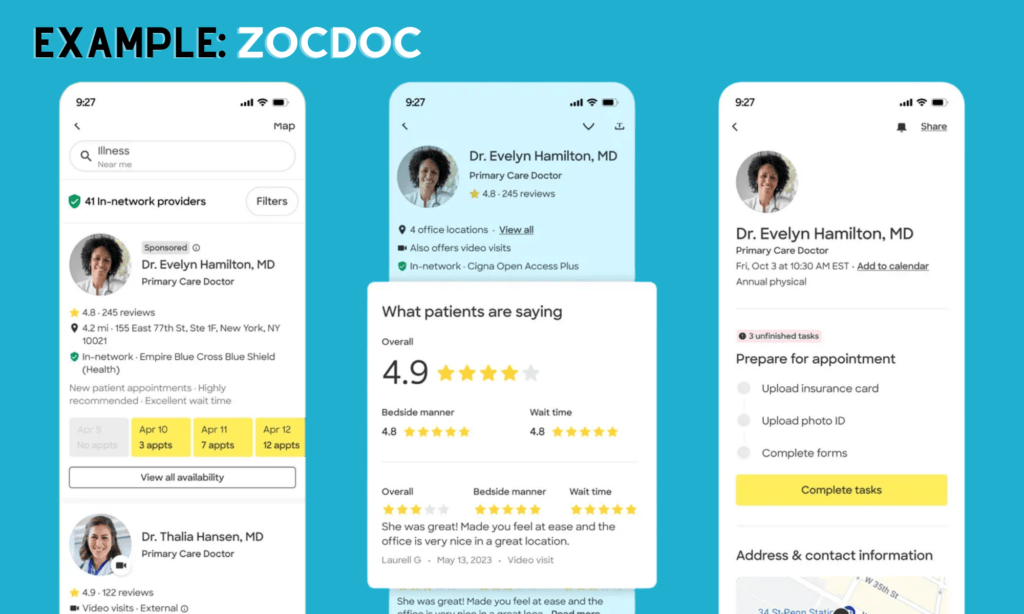
Sometimes, patients don’t know which healthcare providers or services to choose. This time, they wish to have a unified platform – like an online dating app – to “swipe” and choose the right provider. This demand hints at an innovative idea: a healthcare marketplace app connecting providers and patients.
Finding a healthcare provider shouldn’t feel like online dating. But for many people, it kind of does. Endless searches, unclear pricing, confusing availability, and reviews that don’t tell the full story.
This app lets patients compare providers, book appointments, and understand costs upfront. For providers, especially independent clinics or specialists, it makes the target patients closer to them.
Some features to include:
- Provider profiles with specialties, availability, and pricing
- Appointment booking and rescheduling in real time
- Verified patient reviews with context, not just star ratings
- Secure messaging between patients and providers
- Insurance compatibility filters
Challenges when building this app:
- Data accuracy & privacy compliance: This app must update data regularly to ensure accurate pricing, phone numbers, addresses, etc. Further, it has to combine robust security measures to protect data privacy and ensure regulatory compliance.
- Fair ranking algorithms: The app must give fair rankings for patients to trust listings.
8. Teen Cycle Education and Safe Tracking App
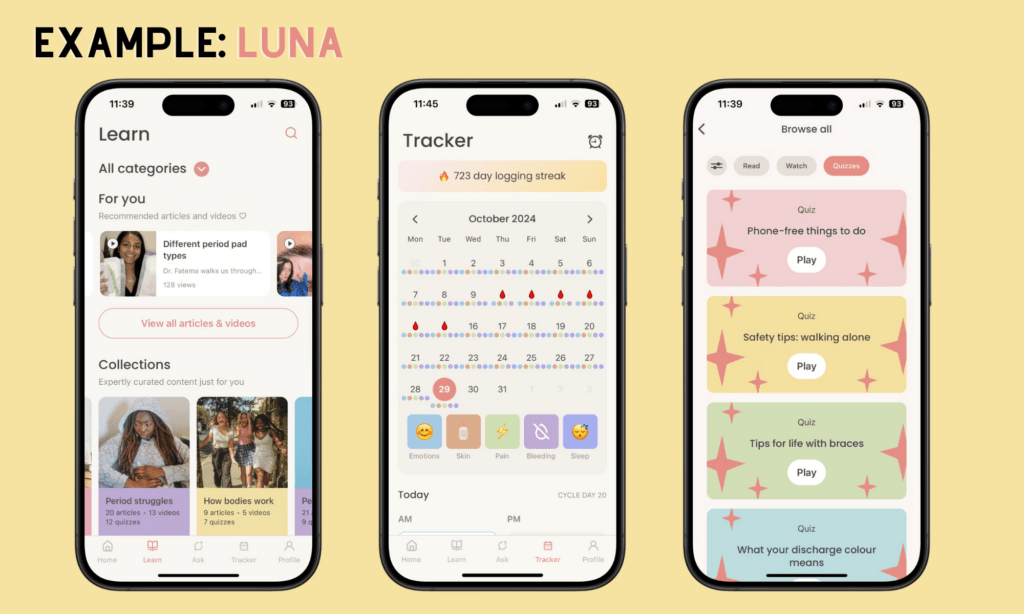
Teenagers today grow up online, yet reproductive health education is still oddly fragmented. Schools cover some basics, while the internet sometimes provides misinformation.
So, why don’t you design an app for teens to address this gap in a safe, age-appropriate way? The app helps teenagers not only track periods, but also understand bodies, changes, and health signals without shame or confusion. And importantly, it offers privacy so that teens can willingly learn about their cycle education without shame or confusion.
Some features to include:
- Simplified cycle tracking with optional reminders
- Educational content written in clear, non-clinical language
- Privacy-first design with minimal data collection
- Mood and symptom tracking without pressure
- Guidance on when to talk to a trusted adult or professional
Challenges when building this idea:
- Privacy and parental consent: As this app is for immature individuals, it must comply with privacy and parental consent laws that may be complicated and vary widely across regions.
- Language and content choice: The language used in this app shouldn’t be too clinical or childish. The tone should be suitable and friendly to make users comfortable.
9. Smart Child Vaccination Tracking App
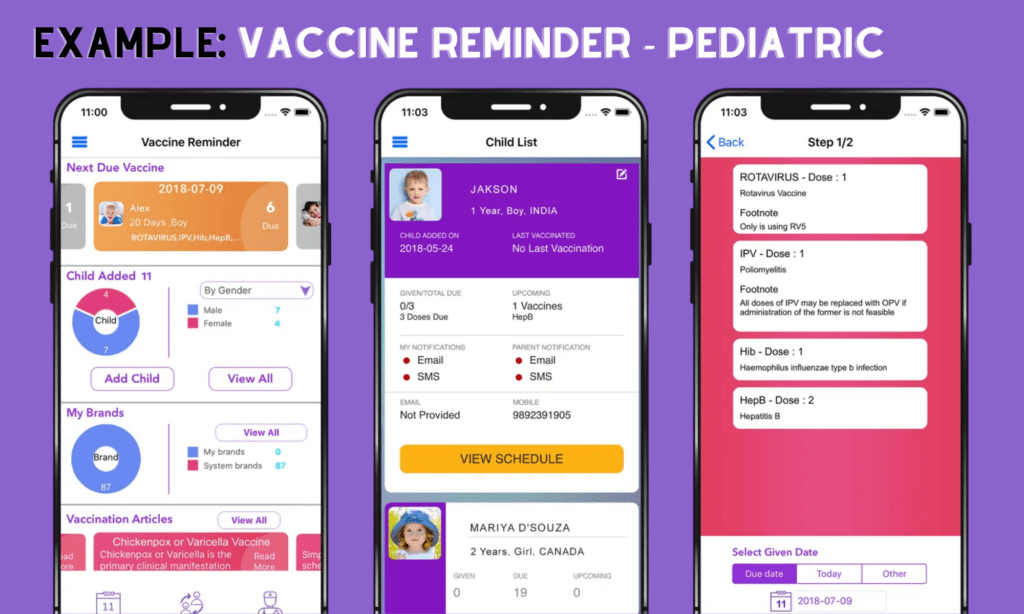
Children can face higher health risks if they’re not properly vaccinated. Parents are busy. Pediatric schedules are full. Families move or change healthcare providers. These are some common reasons that make children miss their vaccination dates.
This raises a real demand for a smart app that helps parents track their children’s vaccinations effectively. This app stores records and sends timely reminders to reduce missed or delayed vaccinations.
Some features to include:
- Personalized vaccination schedules by country or region
- Automated reminders before upcoming doses
- Secure digital storage of vaccination certificates
- Multi-child profiles for families
- Exportable records for schools or clinics
Challenges when building this idea:
- Complex integration with healthcare systems: The app needs to integrate with healthcare systems to update data about vaccines in real-time. This may make app development more complicated.
- High personalization: The app needs to personalize vaccination schedules that fit each child’s health conditions by country.
10. Mother and Baby Health Companion Super App
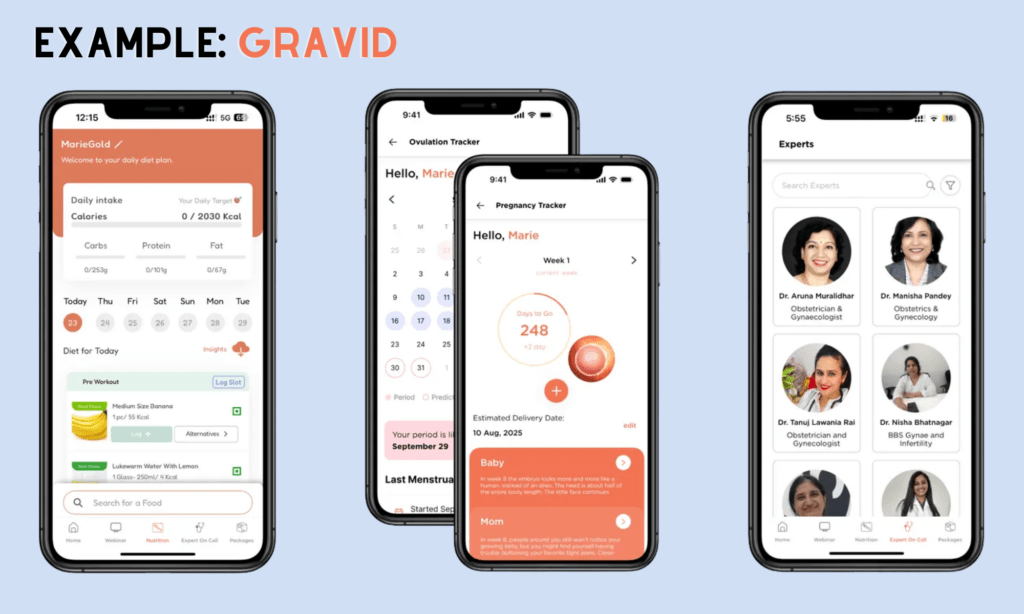
Motherhood doesn’t start at birth nor end after a few months either. Yet many apps treat pregnancy, postpartum, and early childhood as separate journeys. This makes expectant mothers and their families hardly track mother and baby health in a comprehensive way.
This leads to a creative idea about a super healthcare app in which the mother and baby are carefully taken care of, from pregnancy tracking to postpartum recovery to early child development.
Some features to include:
- Unified timeline from pregnancy through early childhood
- Baby growth and milestone tracking
- Postpartum recovery and mental health check-ins
- Feeding, sleep, and routine logs
- Educational content that evolves as the child grows
Challenges when building this app:
- Scope creep: Putting everything related to motherhood in one place can be difficult and dilute the core experience at times.
- Personalization: The app needs to adapt to different parenting styles.
- Data privacy: This app often handles a whole bunch of sensitive data related to mothers and babies. So it must comply with data privacy laws and adopt robust security measures to protect the data.
11. Remote Patient Monitoring App Using Wearables
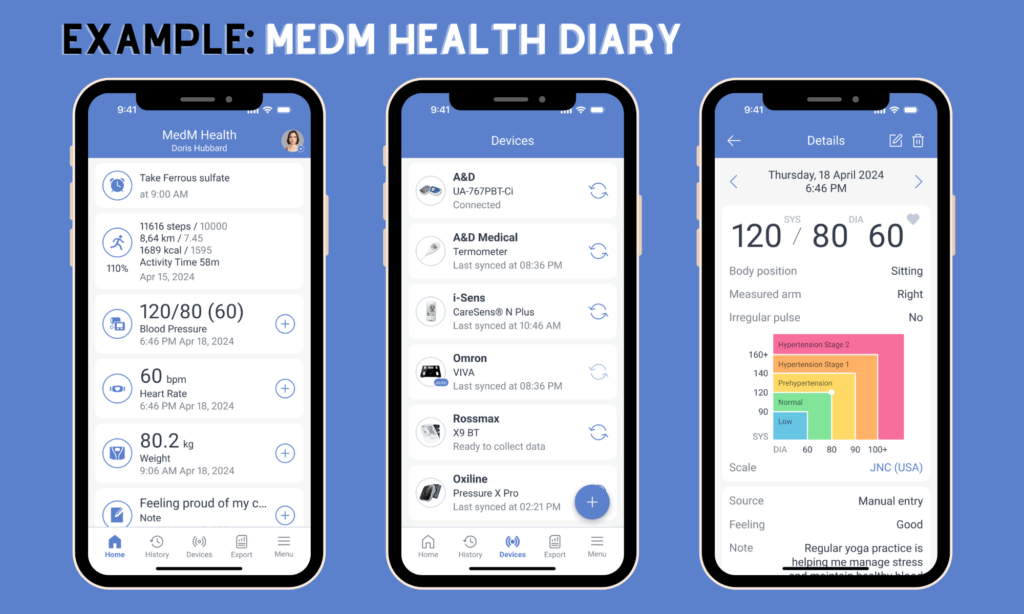
Healthcare is moving out of hospitals and into homes. The rise of wearable devices is considered one of the biggest drivers behind this phenomenon: remote patient monitoring (RPM). Precedence Research stated that the global value of RPM services can reach nearly $21 billion in 2026 and keep growing by nearly 35% until 2035.
Wearables – like smartwatches, fitness bands, and medical-grade sensors – can collect heart rate, sleep patterns, activity levels, oxygen saturation, and other crucial data. They then send this raw data to an RPM app, which derives valuable insights for doctors, caregivers, and patients to act on.
This healthcare app idea is truly a savior, especially for those with chronic conditions or recovering at home. Meanwhile, hospitals and clinics can reduce readmissions and long queues from in-person visits.
Some features to include:
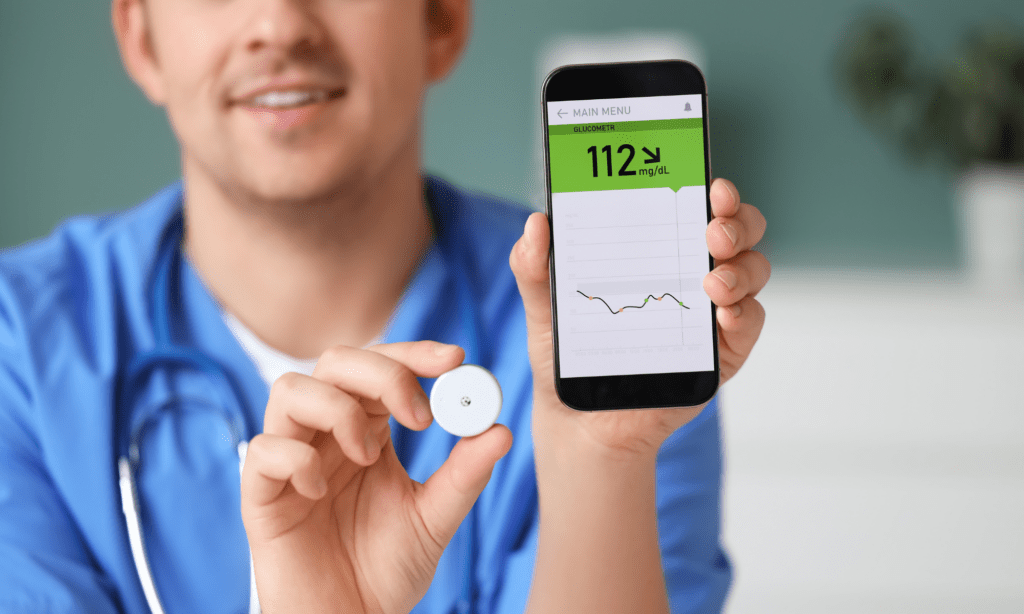
- Integration with popular wearables and medical devices
- Real-time health dashboards for patients and clinicians
- Threshold-based alerts for abnormal readings
- Trend analysis rather than isolated data points
- Secure data sharing with healthcare providers
Challenges when building this app:
- Device compatibility: Not all wearables measure the same way and can connect with the app. So, ensuring device compatibility might be tricky at times.
- Complex integrations: The RPM app needs to seamlessly integrate with not only physical devices using IoT (Internet of Things) technology, but also healthcare systems, like EHR (Electronic Health Records) or HIS (Hospital Information Systems). This makes integrations complex and even costly.
- Data accuracy and security: The app needs to ensure data accuracy for providers to give proper treatment or care. Meanwhile, it must adhere to data privacy regulations.
12. AI Symptom Checker for Primary Care
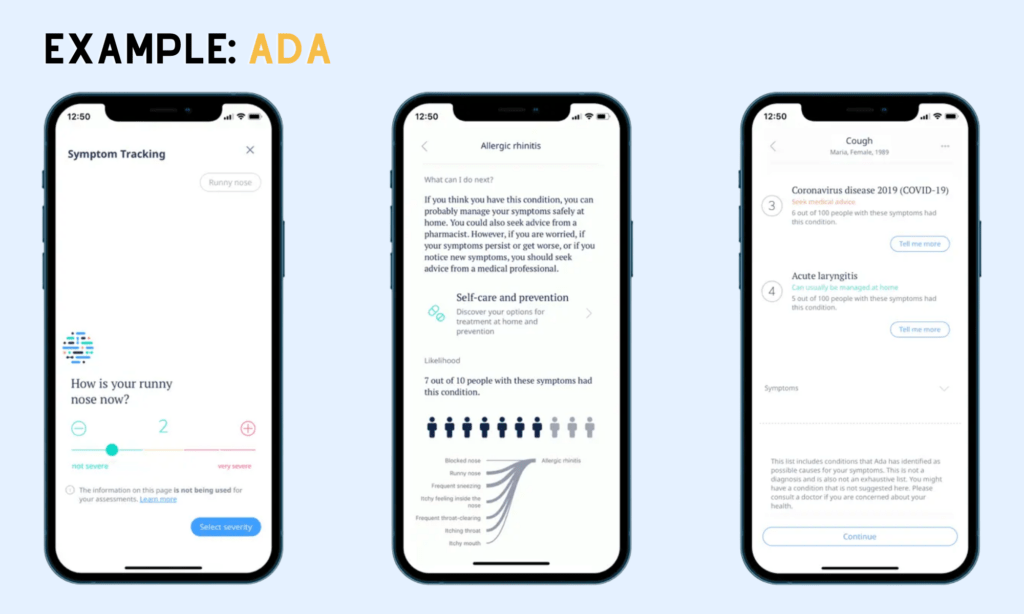
Most people don’t know when a symptom is serious enough to see a doctor. A headache, a rash, or a weird pain that comes and goes. So they either panic and rush to urgent care, or they wait too long and regret it later.
This hints at an AI-powered symptom checker. It doesn’t diagnose, but analyzes reported symptoms and context to help users decide whether to rest, book a primary care visit, or seek immediate help.
Some features to include:
- Conversational symptom input rather than rigid forms
- Risk-level suggestions instead of definitive answers
- Clear explanations of possible next steps
- Integration with appointment booking systems
- Ongoing symptom tracking over time
Challenges when building this app:
- High stake: This app itself is at a high risk. Some diseases have unclear symptoms, especially at early stages. If the AI feels overconfident, its advice can become inaccurate or even dangerous.
- Medical liability and regulatory scrutiny: Although the app itself doesn’t play a direct role in diagnosing, its generated content can significantly affect users. So, the app’s creator (aka. you) must take medical responsibility and comply with data privacy regulations.
13. Medication Adherence Tracking App
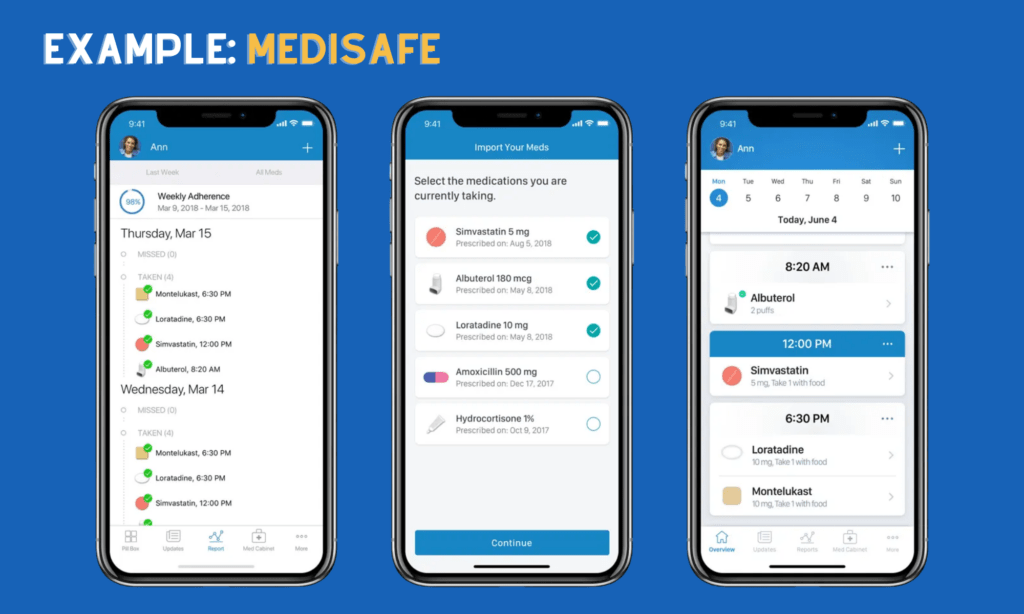
Medication non-adherence is one of those quiet problems that causes very loud consequences. And of course, not everyone can remember every detail about how many doses they take or whether they take medication today.
So, if there’s an app that tracks their medication adherence, it would be great. This gives you an excellent idea of creating such a healthcare app. This app helps users follow daily treatment routines strictly. The app is very helpful for patients managing long-term therapies or for caregivers supporting them.
Some features to include:
- Smart reminders that adapt to user behavior
- Visual dose tracking and history logs
- Alerts for missed or duplicated doses
- Medication education in simple language
- Caregiver notifications (optional)
Challenges when building this app:
- User honesty: If this app relies heavily on self-reporting rather than smart pill devices, it requires users to be honest about their dosage and medication. Otherwise, integrating the app with AI pill devices might be another challenge, increasing the complexity of app development.
- Data privacy: You must adopt robust security measures to ensure data privacy and regulatory compliance.
14. Chronic Disease Lifestyle Management App
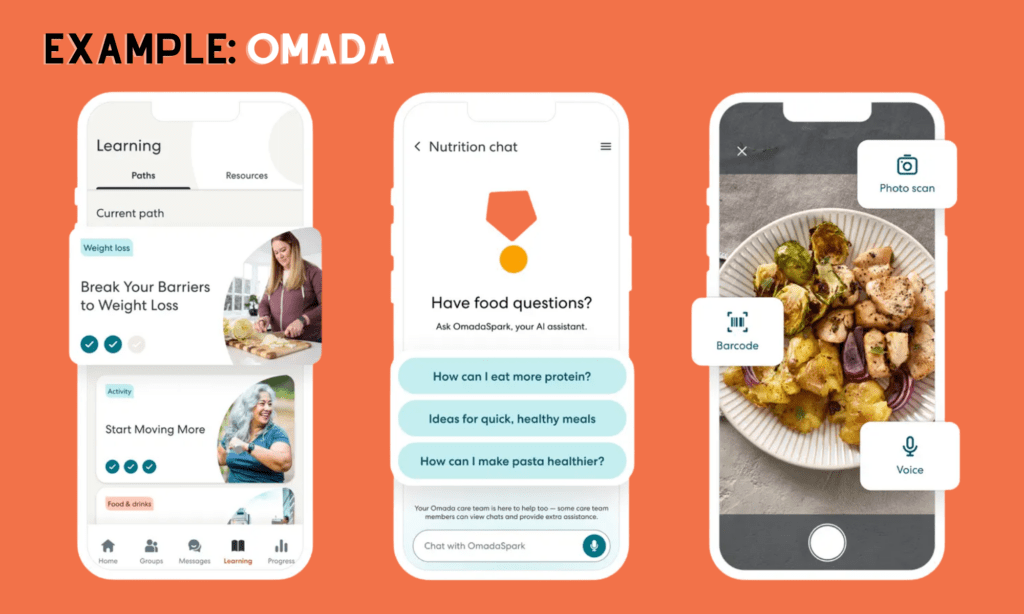
One study found that around six in every ten youngsters, eight in every ten middle-aged people, and nine in every ten older US adults report at least one chronic condition.
Contrary to our common understanding, chronic diseases happen to all age groups. Unfortunately, we have no way to cure them, but only manage them. And that management happens mostly outside clinics. But many healthcare apps now still focus on acute care instead of long-term behavior change.
So, what if you build a lifestyle management app for conditions like diabetes? This is definitely a great healthcare app idea as it tracks habits, detects patterns, and helps users adjust their lifestyle to improve their health.
Some features to include:
- Daily habit tracking for diet, activity, and sleep
- Health metrics visualization over weeks or months
- Personalized nudges instead of rigid goals
- Educational content tied to real user data
- Optional clinician or coach integration
Challenges when building this app:
- Data security & regulatory compliance: This app handles sensitive health data. So it must comply strictly with regulations (like HIPAA or GDPR) and adopt robust security measures to secure data usage.
- Clinical validation: The app requires clinical evidence or validation to provide accurate content for recommendations.
- Clinical and functional integration: The app needs to seamlessly integrate with EHRs and other healthcare systems to centralize data (e.g., about chronic illness or treatment plans).
15. Women’s Health Personalized Care App
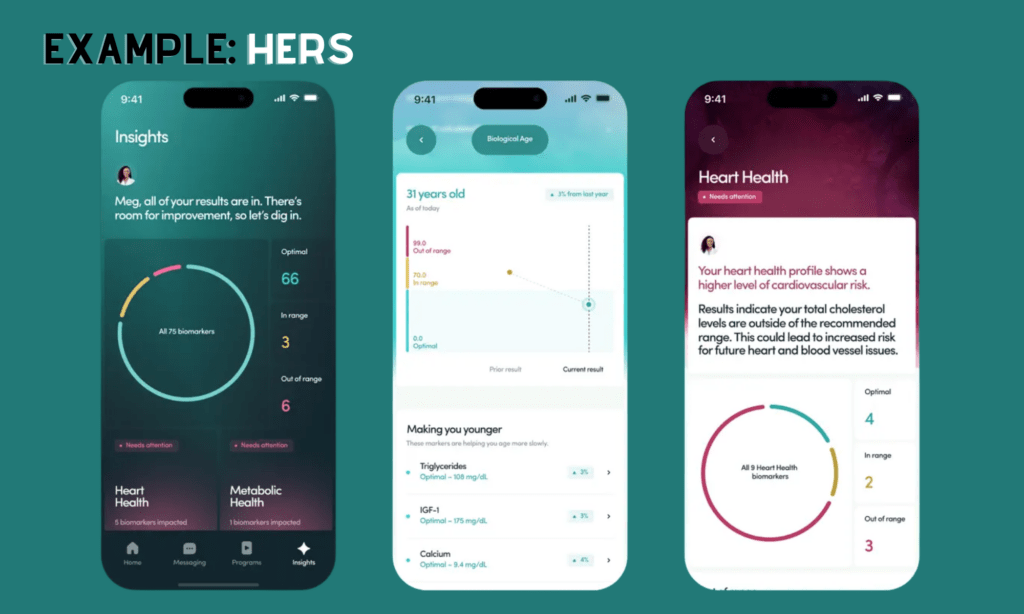
Women are struggling to approach healthcare more than men. When their awareness of healthcare increases, they start demanding more personalized and preventive care. This makes women’s health a $57 billion opportunity in 2026, which is forecast to increase by 5.34% annually in the upcoming years.
Entering this niche segment, therefore, gives you a golden chance to thrive. This app focuses on every aspect of women’s health, from menstruation and pregnancy to postpartum and perimenopause.
Some features to include:
- Lifecycle-based health tracking and insights
- Symptom logging across hormonal phases
- Personalized content that evolves with age and goals
- Secure data sharing with providers
- Mental and physical health check-ins combined
Challenges when building this idea:
- High personalization: As the app covers every aspect of women’s health, regardless of their age and location, health experiences vary widely as well. This makes it hard to personalize care for each user.
- Feature overload: Trying to serve every stage can make the app overwhelmed with features and lose focus.
16. Health Data Analytics Dashboard for Clinics
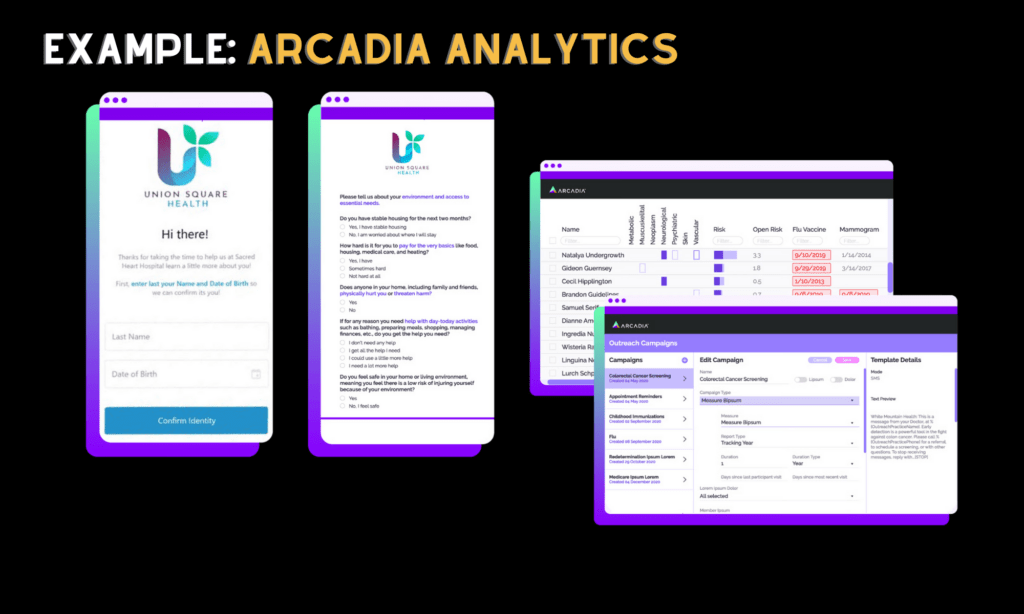
Clinics generate a ton of data every single day. Let’s say appointment records, treatment outcomes, billing info, patient feedback, operational metrics, etc.
Without proper management and analytics, such raw data appears useless in decision-making. So, clinics need a comprehensive dashboard to centralize all data and visually tell them how they’re actually performing. The generated insights then help them optimize workflows, improve services, and deliver better patient outcomes.
Some features to include:
- Unified dashboards combining clinical, operational, and financial data
- Visual trend analysis for patient outcomes and clinic performance
- Custom reports for different roles (doctors, admins, managers)
- Real-time monitoring and predictive analytics for patient flow or resource needs
- Secure data export and compliance-ready reporting
Challenges when building this idea:
- Data integration: The dashboard must collect and update data from different sources (EMR/EHR, patient surveys, operational systems, etc.) in real-time to perform accurate analytics.
- User-centric design: The dashboard must be user-friendly and meet the specific needs of users.
17. AI Medical Appointment Scheduling Optimizer
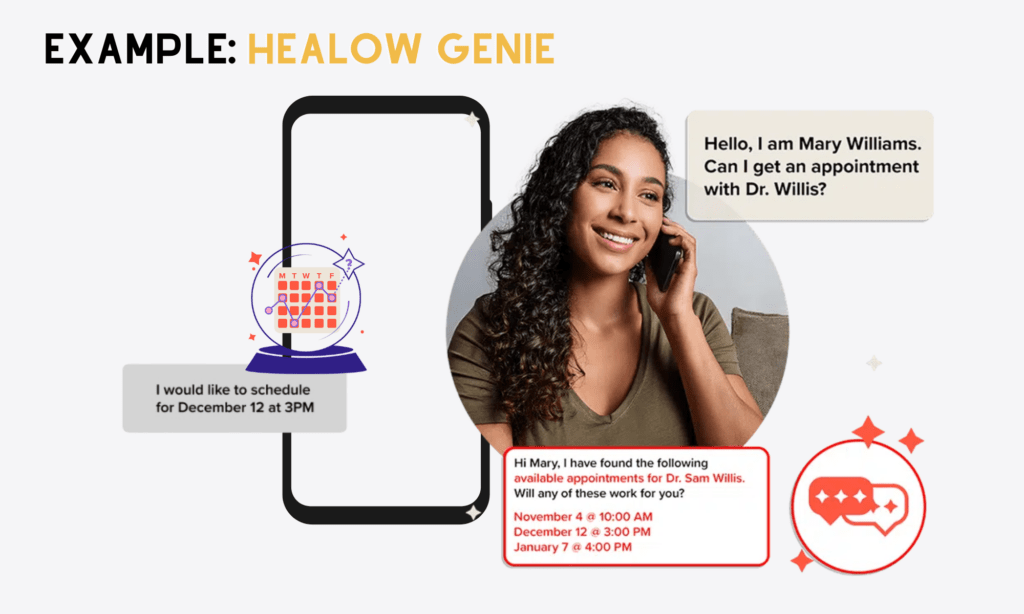
Appointment scheduling sounds simple theoretically. In reality, patients and healthcare providers have to face many problems, like last-minute cancellations or overbooked mornings.
To resolve this problem, why don’t you integrate AI into a medical app to optimize its appointment scheduling? This healthcare app idea uses machine learning algorithms to suggest suitable schedules and manage appointment slots efficiently.
Some features to include:
- AI-driven appointment slot optimization
- No-show prediction and automatic rescheduling suggestions
- Smart reminders based on patient behavior
- Integration with existing EHR and calendar systems
- Real-time adjustments for delays or emergencies
- Voice-based booking and smart routing to human agents when needed.
Challenges when building this app:
- Fair ML algorithms: AI decisions must be fair and explainable to make booking convenient for both patients and clinics.
- Data integration: The app must integrate seamlessly with existing hospital and calendar systems.
- Human involvement: The app doesn’t completely rely on AI to help users book appointments. It needs to identify when to route complex calls or tasks to the right human agents.
How to Choose the Right Healthcare App Idea for Your Startup
Those 17 healthcare app ideas are great and may bring a big success for startups if properly implemented. But it doesn’t mean all ideas fit your business vision. Below are several tips that help you choose the right idea for your startup:
Start with the problem that your potential healthcare app will directly address. Who is your target audience? What are they struggling, yet existing solutions can’t help? How can your potential app help them resolve their pain points?
These questions help you identify the niche to focus on and the must-have features that your target users truly need.
- Prioritize niche specialization
Focus on the niche first (which, however, shouldn’t be too narrow) instead of general wellness concepts. This helps you target the right audience and their pain points more easily. When your app works successfully, then scale.
- Look at your team’s technical expertise
Whether you use an internal team or outsource the project, consider whether the team has the right technical skills and experience in that niche to build your ideal app.
Sometimes you think your idea is appealing and feasible. But the reality may prove the opposite. So, test your idea with MVP development to see how real users truly welcome your app.
You may want a full-fledged app with AI chatbots or integration with IoT devices. But remember that adding these complex features can require specialized skills and increase the cost. Consider building an app that aligns with your budget constraints as well.
- Ensure compliance & security early
All healthcare apps handle sensitive data. So, they must adopt robust security features and ensure regulatory compliance. Accordingly, you have to build an app with these factors in mind instead of considering them as afterthoughts.
Turning Healthcare App Ideas into a Scalable Startup with Designveloper
Coming up with healthcare app ideas is sometimes hard. But turning those ideas into something real, scalable, and actually used demands more physical and mental effort.
Do you need a partner who handles technical complexity and has experience in the healthcare space? If so, work with Designveloper, a leading software and app development company in Vietnam.
Designveloper works with startups that have strong ideas but maybe don’t figure out everything yet. With our technical excellence, we help you move from rough concepts to structured roadmaps, making the app flexibly adapt to your target audience’s demands.
From MVP (Minimum Viable Product) development to scaling features securely, our proven Agile approach focuses on not only fast time-to-market but also long-term value. Our team prioritizes choosing the right tech stacks and building with security and compliance in mind.
Our successful projects in healthcare prove our capabilities and domain understanding:
- ODC: We developed a healthcare platform that connects France-based doctors and patients using technologies like NodeJS, Angular, and MongoDB. The platform helps doctors to manage all their documents, bookings, prescriptions, and payments, while letting patients book appointments, do online check-ups, and order medicines.
- Sensiotec: We built the Virtual Medical Assistant® that measures heart and respiration rate and movement. It then sends this data to the monitoring devices of nurses, removing the need for electrodes or pads touching patients.
If you want to build a high-quality, scalable healthcare app, contact us and discuss your idea further! We’re here to help you go through this healthcare app development journey.