

IoT is moving from “connected” to “context-aware.” Devices now collect signals, understand them, and trigger actions faster. That shift changes budgets, skills, and platforms. It also reshapes what leaders track as iot industry trends enter 2026.
This guide breaks down what will likely matter most over the next few years. You will see where value comes from, what risks grow, and how to plan without hype. You will also get concrete examples that match real operating environments, not lab demos.
How Will IoT Evolve in the Next 5 years?
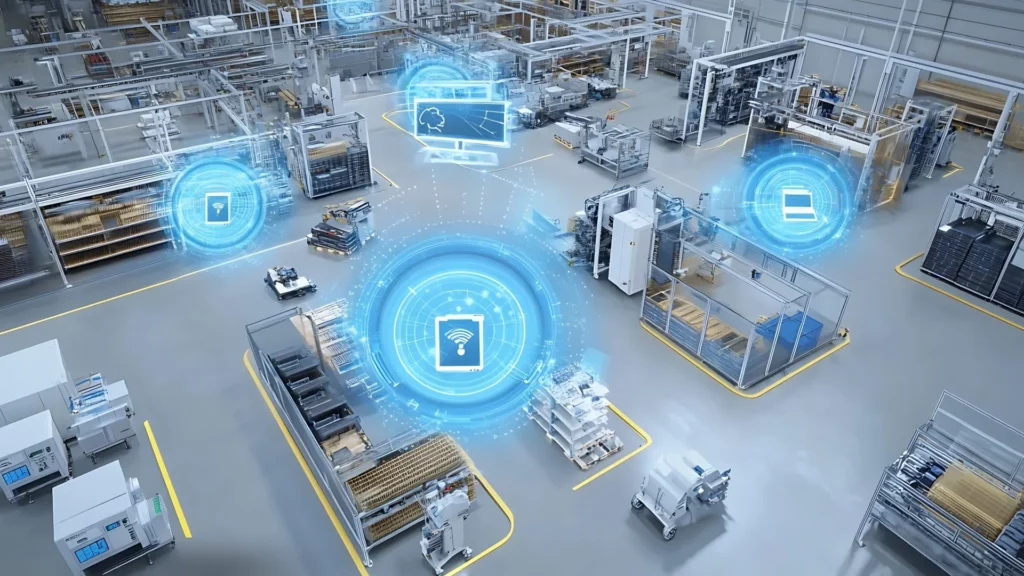
IoT will keep expanding, but the biggest change will happen in how systems make decisions. More teams will push logic closer to where data is created. That reduces delays and lowers bandwidth costs. It also helps when networks get unstable.
At the same time, IoT will look less like “devices + dashboards.” It will look more like “systems + outcomes.” Businesses will connect assets to reduce downtime, improve quality, and cut waste. So, IoT roadmaps will shift from feature lists to measurable operations goals.
Device growth will still be massive. IoT Analytics estimates 21.1 billion globally in 2025, and that scale changes everything from procurement to patching. Larger fleets also force better automation. Manual device management will not survive at that volume.
Money will follow impact. IDC expects IoT ecosystem investments to surpass $1 trillion in 2026, and that implies more long-term programs, not one-off pilots. As a result, governance will mature. Security and data ownership will move earlier in the design process.
Finally, IoT will merge more tightly with AI. Devices will not only report status. They will propose next actions and learn patterns over time. That is why many IoT industry trends now overlap with AI strategy, data engineering, and cyber resilience.
Top 7 IoT Technology Trends Driving Intelligent Systems
1. AIoT (AI-Powered Internet of Things)

AIoT blends IoT sensing with AI decision-making. That sounds obvious, yet the real change is where AI runs. More models will run on gateways, cameras, and industrial PCs. This approach enables faster reactions and better privacy control.
What AIoT Looks Like in Practice
Factories use AIoT to spot defects on a line and stop the process before scrap piles up. Retailers use it to detect shelf preventable stockouts and trigger replenishment. Logistics teams use it to predict temperature risk in cold chains and reroute shipments early.
Why AIoT Accelerates in 2026
Hardware keeps improving. Models also get smaller and more efficient. That means teams can run useful inference without sending every frame to the cloud. It also reduces the cost per decision.
Market forecasts reflect this momentum. MarketsandMarkets projects the AIoT market will reach USD 81.04 billion by 2030, which signals strong vendor and buyer focus across industries. Even so, success depends on data quality and clear actions, not model novelty.
How to Start Without Overbuilding
- Pick one decision loop first, such as “detect and stop,” or “predict and schedule.”
- Define the action owner, like maintenance, quality, or store ops.
- Log outcomes, then retrain with real edge conditions and drift checks.
2. Edge Computing for IoT

Edge computing moves processing closer to devices. That matters because IoT data is often noisy, fast, and expensive to ship. Edge also helps when you need instant response, like safety shutdowns or collision avoidance.
What Changes When You Move to the Edge
You stop treating the cloud as the only brain. Instead, you build a layered system. Devices sense. Edge filters and decides. Cloud trains, coordinates, and stores long history.
Why Edge Becomes the Default
Data gravity keeps pulling compute outward. Cisco notes that 75% of enterprise data will be created and processed at the edge by 2027, and IoT plays a big role in that shift. As fleets grow, edge also becomes a cost control tool. You send fewer raw streams and keep only what matters.
High-Value Edge Use Cases
- Predictive maintenance: gateways score vibration or current signatures and flag risk early.
- Computer vision: cameras detect safety gear, intrusions, or quality defects in real time.
- Energy optimization: local controllers tune HVAC, motors, and compressors by live demand.
Common Pitfalls to Avoid
Edge adds complexity if you treat every site as special. So, standardize images, configs, and update paths. Also, plan for remote debugging. Otherwise, field teams will struggle when failures happen at scale.
3. Digital Twin Technology for IoT Systems

A digital twin is a living model of a physical asset or process. It updates with IoT data. It then helps teams simulate, predict, and optimize outcomes before they act in the real world.
Why Digital Twins Matter More Now
IoT fleets generate continuous signals. That stream becomes more useful when you map it to behavior. A twin gives you that mapping. You can test “what if” scenarios. You can also compare expected vs actual performance and find hidden inefficiencies.
Where Digital Twins Deliver Fast ROI
- Manufacturing: simulate line bottlenecks and tune cycle times without disrupting production.
- Buildings: optimize HVAC schedules using occupancy, weather, and equipment status.
- Utilities: model grid assets and predict failures based on load and temperature patterns.
Market Signal to Watch
Adoption keeps rising as this IoT industry trend matures. A MarketsandMarkets forecast highlights the digital twin market reaching $110.1 billion by 2028, and IoT data feeds much of that value. Still, a twin only helps if teams connect it to decisions. A model that never changes a schedule becomes expensive artwork.
4. 5G-Advanced and the Roadmap to 6G
Connectivity choices shape every IoT program. 5G-Advanced improves performance and efficiency over baseline 5G. It also helps support more deterministic behavior for industrial and campus networks.
What 5G-Advanced Unlocks for IoT
Teams can run more private networks in factories, ports, and hospitals. They can also connect moving assets with stronger mobility handling. That helps with robotics, AGVs, and remote inspection tools.
Why Momentum Continues
Scale is already meaningful. GSMA reports that 5G connections worldwide surpassed two billion at the end of 2024, which supports a broader device and module ecosystem. As coverage and device costs improve, more IoT designs will treat cellular as a primary path, not just a backup.
How to Use Cellular Without Lock-In
- Design fallback paths, such as Wi-Fi or Ethernet, for critical sites.
- Use eSIM and multi-profile strategies when regions vary by carrier strength.
- Separate device identity from carrier identity to simplify migrations later.
6G will take longer, yet planning should already be starting for this IoT industry trend. Teams should track spectrum and standards progress, but they should not pause delivery. Most business value still comes from clean data, tight actions, and secure operations.
5. IoT Cybersecurity and Zero Trust Architecture

IoT expands attack surface fast. Devices often sit in harsh environments. They also run long lifecycles. That mix makes patching and monitoring harder, so security must become structural.
Why Zero Trust Fits IoT
Zero trust assumes no device or network zone is safe by default. That mindset matches IoT reality. Devices get replaced. Networks change. Supply chains introduce unknowns. So, identity and verification matter more than location.
Costs Make the Risk Real
Security is not only technical. It is financial. IBM reports the average global breach cost reached USD 4.88 million, and IoT-heavy environments can raise blast radius when segmentation is weak. Therefore, teams should treat device fleets like critical infrastructure, not “extra endpoints.”
What to Implement First
- Device identity: unique keys, certificate-based auth, and secure provisioning.
- Network segmentation: isolate device classes and limit lateral movement.
- Secure updates: signed firmware, staged rollout, and rollback support.
- Continuous monitoring: anomaly detection on traffic, behavior, and integrity.
Vulnerability Reality Check
Threat volume stays high across software ecosystems. ENISA identified 19,754 vulnerabilities in its threat landscape analysis, and IoT programs must assume exposure will keep rising. That is why asset inventories and patch prioritization matter as much as new controls.
6. Internet of Medical Things (IoMT)

IoMT connects medical devices, wearables, and clinical systems. It improves monitoring and care continuity. It also helps hospitals reduce manual checks and respond earlier to risk signals.
Where IoMT Creates Immediate Value
Remote patient monitoring can reduce unnecessary visits and catch issues sooner. Smart infusion pumps and connected ventilators can improve asset tracking and maintenance planning. Wearables can support chronic care with more frequent, lightweight readings.
Why IoMT Grows Fast
Demand rises as populations age and chronic conditions increase. At the same time, hospitals need better utilization and lower downtime. So, connected devices become part of operational resilience, not only patient experience.
A Clear Market Signal
Financial Times cites Statista projecting the Medical IoT software market to be worth $134 billion by 2029, which shows how quickly platforms and integrations expand around clinical devices. Still, healthcare must pair growth with strong security and compliance. Patient data raises the stakes.
Practical Guardrails for IoMT
- Segment clinical devices away from general IT traffic.
- Use strict vendor access controls and time-bound remote sessions.
- Document device lifecycles and plan replacements before support ends.
7. Sustainable and Energy-Efficient IoT

Sustainability is no longer a side theme. Energy prices and climate goals push it into core strategy. IoT can help by measuring usage, reducing waste, and automating efficiency actions.
Why Sustainability and IoT Converge
You cannot reduce what you cannot see. Sensors reveal where power, heat, water, and materials leak. Then automation can adjust systems continuously, not only during audits.
Energy Pressure Keeps Rising
Digital infrastructure also consumes power. The IEA estimates data centres consumed 415 terawatt hours (TWh) in 2024, which pushes organizations to design smarter data flows. That reinforces edge processing, efficient protocols, and right-sized retention.
Sustainable IoT Design Choices
- Low-power sensing: pick efficient chipsets and sleep-first firmware patterns.
- Event-driven data: transmit only when thresholds or anomalies occur.
- Lifecycle thinking: prioritize repairable hardware and longer support windows.
- Carbon-aware operations: schedule heavy analytics when grids run cleaner, when possible.
Which Industries Benefit Most from IoT Trends?
Manufacturing often leads because downtime is expensive and measurable. IoT sensors detect early wear. AI models then predict failures. Teams can schedule maintenance before breakdowns disrupt production. Digital twins also help optimize throughput and reduce scrap.
Energy and utilities also gain quickly. Grid assets spread across wide areas. Sensors help monitor load, heat, and vibration. Edge computing supports local control. As a result, operators respond faster to faults and reduce outage impact.
Logistics and supply chain benefit because conditions change constantly. Smart trackers monitor location, temperature, and shocks. Teams then protect high-value goods and prove compliance. Better visibility also improves ETA accuracy and inventory planning.
Healthcare benefits when monitoring becomes continuous and less intrusive. Wearables and connected devices help clinicians spot decline earlier. Hospitals also track equipment utilization and reduce search time for critical devices. That improves both care and operations.
Retail and smart buildings gain through automation and experience improvements. Stores can monitor foot traffic, shelves, and refrigeration. Buildings can tune HVAC and lighting by actual occupancy. This reduces waste and keeps comfort stable.
Agriculture and environmental monitoring also rise as sensor costs fall. Farmers track soil moisture, weather, and pest risk. They then irrigate and treat more precisely. That saves inputs and supports resilience during extreme weather.
How Businesses Can Prepare for IoT Technology Trends

Start with outcomes, not devices. Pick the operational metric you want to move. Then map the decision loop that changes it. This approach prevents “sensor sprawl” with no clear owner.
Next, design an architecture that matches your latency and reliability needs. Put real-time decisions at the edge when seconds matter. Keep fleet coordination and long history in the cloud. This split also supports cost control and better privacy choices.
Data discipline matters early. Define what you collect, why you collect it, and how long you keep it. Use consistent naming and units across sites. Otherwise, analytics becomes slow and fragile. Clean data also makes AIoT far easier to scale.
Security needs to be built in, not bolted on. Inventory every device and software component. Assign ownership for patching and certificate renewals. Segment networks by device type and risk level. Then test incident response with real drills, not slide decks.
Vendor selection should follow your operating model. Choose platforms that support remote provisioning, updates, and observability. Also check integration depth with your current stack, such as ERP, CMMS, or EMR. Integration determines time-to-value more than dashboards do.
Talent and process will decide success. Build a cross-team squad with operations, IT, security, and data roles. Give that squad clear authority for standards. Then document runbooks for onboarding, troubleshooting, and decommissioning. These details turn pilots into durable systems.
Finally, measure progress with a small set of KPIs. Track reliability, cost impact, and risk reduction. Review results often and adjust fast. This habit keeps your IoT program aligned with real business value and keeps IoT industry trends from becoming distractions.
Conclusion
These iot industry trends reward teams that build for speed, scale, and security from day one. We see that shift every time clients move from pilots to real operations. So we design IoT systems as full products, not as device demos.
At Designveloper, we bring product thinking to connected systems. We pair firmware and embedded work with cloud platforms, mobile apps, and clean UI/UX. We also build data pipelines that support AIoT and edge decisions. Then we lock everything down with secure identity, update flows, and clear access control.
Our track record supports that promise. We formed in 2013, and we have grown into a team of more than 90 people across engineering, QA, and design. We have delivered over 100+ custom projects across platforms like WorkPacks, ODC, Walrus Education, and Swell & Switchboard. We also helped modernize HANOI ON with a unified web, mobile, and TV app ecosystem that officially launched on July 10, 2024.
Clients also value how we work. Our profile shows 4.9/5 (9 reviews), and we keep that trust by shipping in clear iterations and communicating fast. If you want to turn IoT signals into real actions, we can help you plan the architecture, build the software, and run the system at scale.