

Software teams do not become Agile just by saying they value flexibility. They need a repeatable way to plan, build, review, and improve. That is where an agile framework helps. It turns Agile ideas into daily habits, team rules, and delivery routines.
This guide explains what an agile framework is, why it matters in software development, and which models teams use most often. It also answers common questions such as what Agile vs Scrum means, what the 3-5-3 rule is, and how an agile framework vs waterfall comparison should shape your choice. That context still matters today because recent industry research shows 71% of organizations use Agile in the software development lifecycle, but only 11% say they are very satisfied with Agile’s effectiveness.
What Is An Agile Framework?
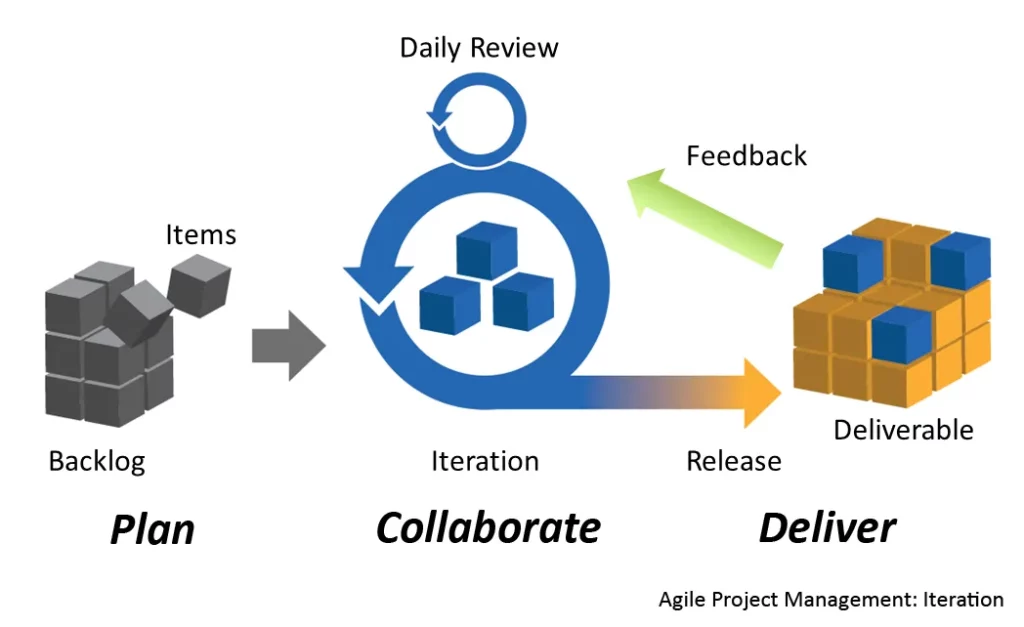
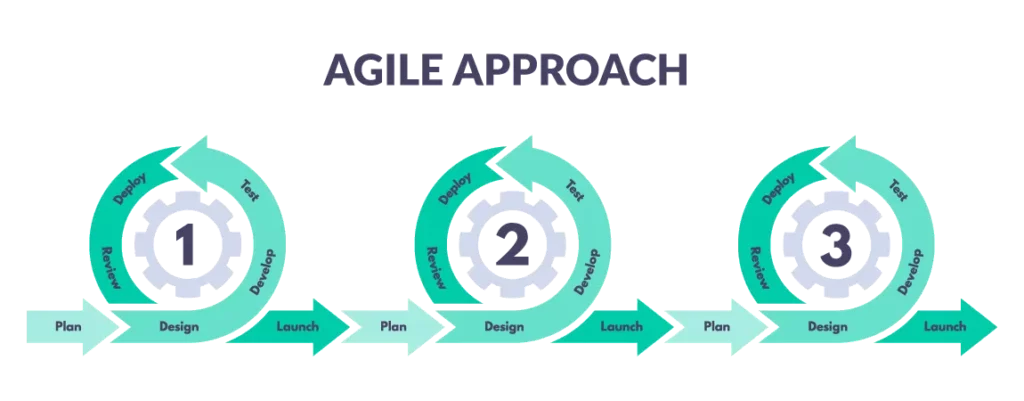
An agile framework is a structured way to apply Agile values to real software work. It gives teams a practical model for planning, prioritizing, collaborating, reviewing progress, and reacting to change. In simple terms, Agile is the mindset, while the framework is the operating system that helps a team practice that mindset every day.
The idea starts with the Agile Manifesto. It shifted software delivery away from rigid, plan-heavy habits and toward adaptability, customer feedback, and working software. From that foundation, different frameworks emerged. Some focus on short iterations. Others focus on workflow, engineering discipline, or enterprise coordination.
That is why there is no single agile development framework for every team. Scrum uses timeboxed sprints and clear accountabilities. Kanban focuses on flow and work-in-progress limits. XP strengthens technical quality. SAFe coordinates many teams at once. So, when people ask, “What are the Agile frameworks?” the real answer is that Agile includes a family of approaches built for different contexts.
It is also important to separate Agile from Scrum. Agile is the umbrella philosophy. Scrum is one agile framework under that umbrella. The same logic applies to other Agile framework examples such as Kanban, XP, Lean, and SAFe.
One more nuance matters. The term agile framework is used loosely in practice. For example, Kanban University explains that Kanban is a management method, not a methodology or process framework. Even so, most teams still include it in an agile frameworks list because it solves the same core problem: how to deliver value with less waste and more responsiveness.
Why Are Agile Frameworks Important In Software Development?

Agile frameworks matter because software work is full of uncertainty. Requirements move. Users change their minds. Technical risks appear late. Dependencies slow delivery. Without a framework, teams often react with ad hoc meetings, vague priorities, and inconsistent quality. A framework reduces that chaos.
First, an agile framework creates shared language. People know how work enters the system, who owns priorities, when feedback happens, and what “done” means. That clarity reduces friction between product, design, engineering, QA, and stakeholders.
Second, a framework improves adaptation. It gives teams regular moments to inspect results and change course. That matters even more now because software delivery is changing quickly. Digital.ai reports that AI adoption surged to 84% in its latest State of Agile research. As AI tools speed up coding, testing, and planning, teams need stronger workflow discipline, not less.
Third, frameworks help teams balance speed with quality. A good framework does not only push work out faster. It helps teams protect focus, expose blockers, and build feedback into the process. That is why mature teams often combine delivery structure with engineering practices such as automated testing, continuous integration, and backlog refinement.
Fourth, frameworks make scaling more realistic. A single team can improvise for a while. A company with many teams cannot. Once several product groups share goals, architecture, release windows, and compliance needs, the business needs coordination. That is one reason 42% of respondents report using a hybrid model that mixes Agile, DevOps, or other approaches. Teams are no longer choosing between one pure model and another. They are choosing a fit-for-purpose system.
That trend matches PMI’s view that hybrid management frameworks are gaining ground as organizations combine predictive and agile practices. So, the value of an agile framework is not dogma. The value is fit, clarity, and repeatability.
Top 10 Most Popular Agile Frameworks Used By Organizations And Teams
No agile frameworks list is universal. Different industries prefer different models. Still, the ten approaches below remain the most widely used, most referenced, or most influential in modern software delivery. Some work best at team level. Others help organizations scale Agile across products, portfolios, or business units.
1. Scrum
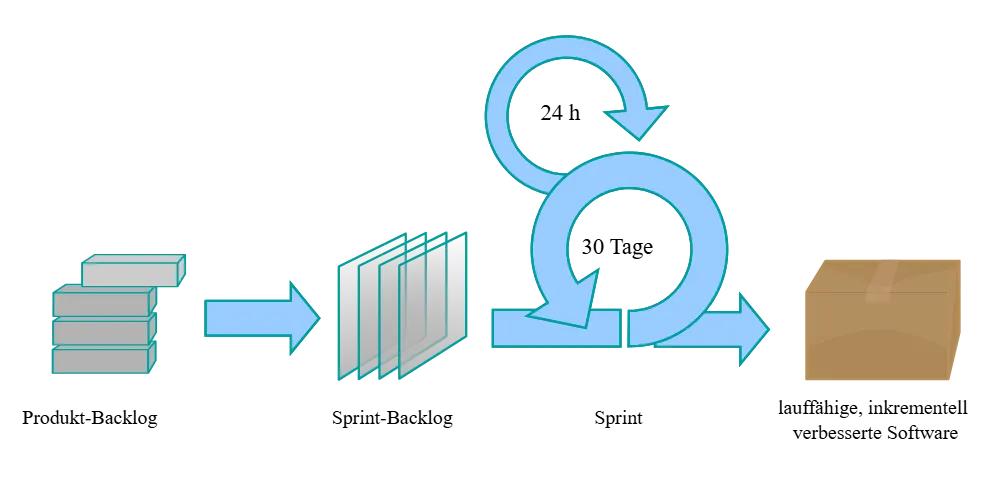
Scrum is the most recognized team-level agile framework. It organizes work into short sprints, keeps a prioritized backlog, and uses regular review and retrospective cycles to improve both product and process. That makes Scrum a strong choice when a team needs rhythm, transparency, and clear ownership.
Scrum works well for product teams that build in increments. A SaaS team launching customer-facing features every few weeks is a typical fit. The team can plan a sprint, deliver a usable increment, gather feedback, and then adjust the next sprint based on what it learned.
This framework is especially useful for teams that need a simple starting point. However, Scrum can become mechanical if people follow events without embracing inspection, adaptation, and real accountability.
2. Kanban
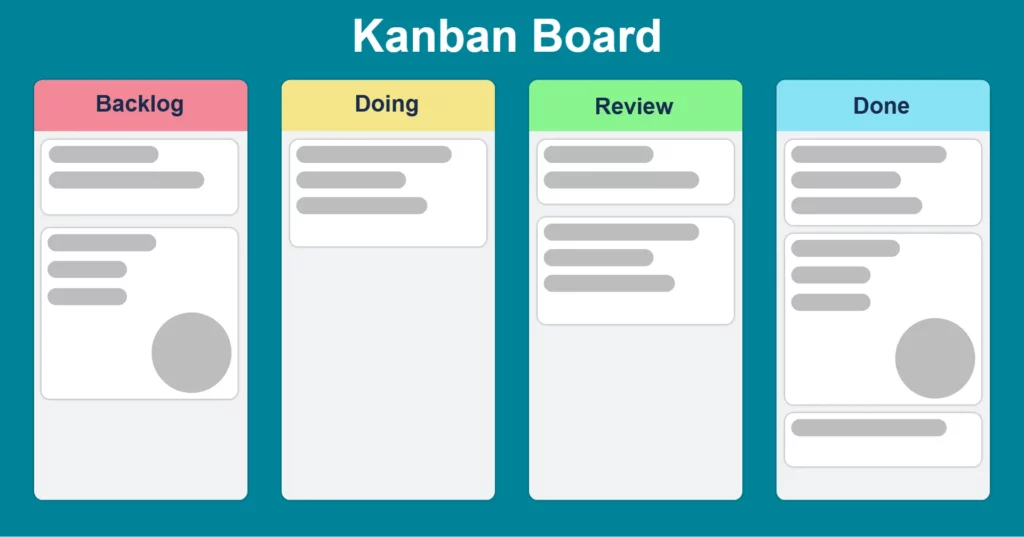
Kanban focuses on visualizing workflow, limiting work in progress, and improving flow over time. Instead of timeboxed sprints, Kanban helps teams pull work through a system as capacity becomes available. That makes bottlenecks visible fast.
Kanban fits teams with continuous demand. Think of a platform team, an operations-heavy engineering group, or a product support team handling unpredictable requests. In those cases, fixed sprint commitments may feel artificial. Flow, queue health, and cycle time matter more.
Kanban also works well for teams that want a lighter transition into Agile. It starts from the current process and improves it step by step. That is why many organizations use it before, after, or alongside Scrum.
3. Extreme Programming (XP)
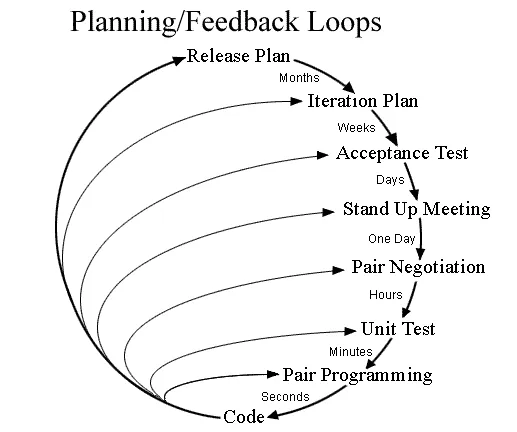
Extreme Programming (XP) is an agile software framework that puts engineering excellence at the center. It is known for practices such as test-driven development, pair programming, continuous integration, small releases, and frequent refactoring. In plain terms, XP helps teams move fast without letting the codebase decay.
XP is a strong fit when technical quality is the biggest risk. A team rewriting a payments service, a core API, or a security-sensitive product often needs more than sprint planning. It needs disciplined coding habits that catch defects early and keep the design clean.
Teams often blend XP with Scrum. Scrum gives delivery structure. XP gives the software engineering muscle that helps the team ship reliable code inside that structure.
4. Scaled Agile Framework (SAFe)
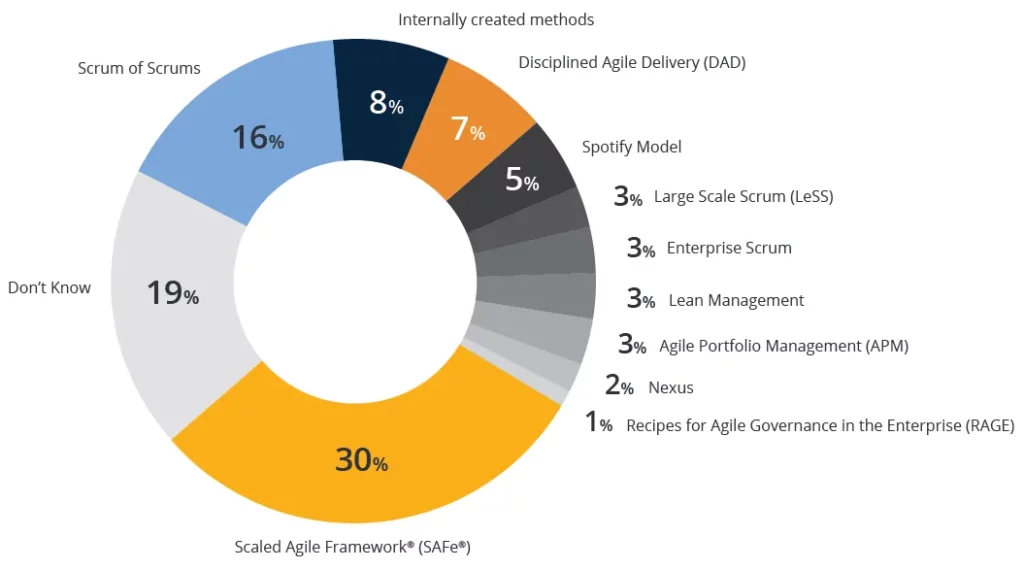
Scaled Agile Framework (SAFe) helps organizations apply Agile across many teams. It adds planning, coordination, governance, and portfolio alignment on top of team-level practices. For large enterprises, that extra structure is often the main reason SAFe enters the conversation.
SAFe is useful when several teams build parts of one product ecosystem and must align on roadmap, architecture, release timing, and business priorities. A bank modernizing digital channels or a manufacturer building connected platforms may need that level of coordination.
SAFe also comes with a detailed Scaled Agile Framework glossary, which helps large organizations standardize terms across roles and trains. Just as important, the Scaled Agile Framework built in quality concept treats quality as something teams must design into the work, not inspect at the end.
That focus appears to matter in practice. The latest SAFe research reports that 68% of respondents report a significant or some increase in employee satisfaction after implementing SAFe. Even so, SAFe is not ideal for every company. Small teams may find it too heavy.
5. Feature-Driven Development (FDD)
Feature-Driven Development (FDD) focuses on delivering software through small, client-valued features. It uses a model-first approach, then moves through planning, design, and build steps centered on those features. This makes FDD more structured than some lighter Agile approaches.
FDD fits projects with a large domain, many business rules, and a need for visible progress by feature. For example, a business platform with many functional modules can benefit from feature-level organization because stakeholders can track delivery in business language, not just technical task lists.
This framework can feel more design-oriented than Scrum or Kanban. That is helpful when architecture matters and the product must stay coherent as it grows.
6. Adaptive Software Development (ASD)
Adaptive Software Development (ASD) is built around a simple cycle: speculate, collaborate, and learn. It accepts uncertainty rather than pretending every requirement can be known up front. That mindset makes ASD useful in high-change environments.
ASD works well when a team is exploring a new product space or building under unclear requirements. A startup testing a fresh product idea or an innovation lab prototyping new workflows can use ASD to learn quickly without locking itself into early assumptions.
This framework is less common in day-to-day delivery conversations than Scrum or Kanban. Still, its logic remains influential because many modern teams now work in exactly the kind of uncertainty ASD was designed to handle.
7. The Crystal Method
The Crystal Method is a family of human-centered Agile methods created by Alistair Cockburn. Crystal puts people, communication, and team context ahead of rigid process rules. It adapts the level of discipline to the size and criticality of the project.
This makes Crystal useful for teams that want agility without ceremony overload. A small internal product team, for example, may value direct conversation, frequent delivery, and lightweight documentation more than a fixed template copied from another company.
Crystal is appealing because it treats process as contextual. It asks what the team needs to succeed here, not what another team needed somewhere else.
8. Lean Software Development (LSD)
Lean Software Development (LSD) focuses on eliminating waste, improving flow, amplifying learning, and delivering value with quality and speed. In software teams, that usually means smaller batches, less waiting, less rework, and fewer activities that do not help the customer.
Lean works well when teams struggle with process drag. A company with slow approvals, too many handoffs, and long release cycles can use Lean thinking to simplify the system before adding more ceremony on top of it.
It also pairs well with Kanban. Lean defines the mindset around waste and value. Kanban makes the flow visible and manageable.
9. Disciplined Agile (DA)
Disciplined Agile (DA) is a hybrid toolkit that helps teams choose their way of working based on context. Instead of prescribing one fixed model, DA combines ideas from Scrum, Kanban, XP, Lean, SAFe, and traditional project methods. That makes it attractive for organizations with mixed delivery realities.
DA is a good choice when one framework alone feels too narrow. A company may have product squads, integration-heavy teams, vendor constraints, and governance requirements at the same time. In that setting, DA offers decision support rather than one strict playbook.
This is why DA often appeals to mature organizations. It assumes that process choices should reflect trade-offs, not ideology.
10. Rapid Application Development (RAD)
Rapid Application Development (RAD) emphasizes fast prototyping, quick user feedback, and iterative improvement. It reduces heavy upfront planning and focuses on getting a working model in front of users early.
RAD is especially useful when interface feedback matters more than long specification documents. An internal approval portal, a simple customer dashboard, or a workflow tool can benefit from quick prototypes that users react to immediately.
RAD is older than many current Agile labels, but its core idea still matters. When teams need to validate assumptions fast, working prototypes often teach more than extensive planning.
How To Choose The Right Agile Framework For Your Development Team?

The right agile framework depends on context, not fashion. A framework should fit the team’s size, the product’s risk, the company’s structure, and the speed of change around the work.
Team size. Small, cross-functional product teams often do well with Scrum because it creates a clean cadence and clear ownership. Teams with constant inflow and support work often prefer Kanban. Large organizations with many interdependent teams usually need SAFe or another scaling model.
Project complexity. If the hardest problem is technical quality, XP deserves attention. But if the hardest problem is coordination across many business features, FDD or SAFe may work better. And if uncertainty is high and requirements are unstable, ASD or RAD can give the team more room to learn.
Delivery timeline. If the business wants fixed review points and regular increments, Scrum is easier to manage. And when the business needs continuous flow and frequent reprioritization, Kanban often fits better. Finally, if early user feedback is the main priority, RAD can shorten the path from idea to prototype.
Organizational structure. Centralized enterprises often need more governance, shared language, and planning alignment. That is where SAFe or Disciplined Agile can help. Flat teams with high trust and direct communication may prefer Scrum, Kanban, Lean, or Crystal.
Level of Agile maturity. Newer teams usually need a simple system first. Scrum gives that structure. More mature teams can combine methods. A team may run Scrum for planning, XP for engineering, and Kanban boards for daily flow. Mature organizations often move toward hybrid models because they understand their trade-offs better.
A practical rule looks like this. Small teams usually start with Scrum. Continuous workflow usually points to Kanban. Enterprise scale usually points to SAFe. Heavy engineering risk points to XP. Mixed realities and governance needs point to Disciplined Agile. If the product is still fuzzy, ASD or RAD may fit better than a rigid sprint routine.
The best choice is the one your team can actually follow, measure, and improve. A smaller framework practiced well beats a larger framework used only in meetings.
FAQs About Agile Frameworks

What Is The Difference Between Agile Methodology vs Agile Framework?
The difference is scope. Agile methodology usually refers to the broader philosophy, principles, and ways of working behind Agile. An agile framework is the concrete structure used to apply those ideas in practice. So, Agile is the umbrella. Scrum, Kanban, XP, and SAFe are implementations under that umbrella.
This also answers the common “What is agile vs scrum?” question. Agile is the mindset. Scrum is one framework that helps a team practice that mindset through sprints, backlog management, and review loops.
What Are The 4 Principles of Agile?
Strictly speaking, Agile does not have four principles. It has four values and twelve principles. When people ask for the “four principles,” they usually mean the four values from the Manifesto: “Individuals and interactions over processes and tools,” “working software over comprehensive documentation,” “customer collaboration over contract negotiation,” and “responding to change over following a plan.”
Those values do not reject planning, tools, or documentation. They simply say teams should value adaptability and customer outcomes more when trade-offs appear.
What Is The 3-5-3 Rule In Agile?
The 3-5-3 rule is not a universal Agile law. It is a Scrum memory aid. Scrum.org describes it as 3 roles, 5 events, and 3 artifacts that define the core structure of Scrum.
That shortcut is useful because it reminds teams that Scrum is more than standups and sprints. It includes clear accountability, recurring events, and visible artifacts that support transparency and adaptation.
What’s The Difference Between Agile And Waterfall?
The main difference is how each model handles planning and change. Agile is iterative. It expects learning during delivery and allows teams to adapt as new information appears. Waterfall is sequential. It works through phases in order and usually assumes requirements are clearer at the start.
That does not make Waterfall obsolete. According to IBM’s overview of common SDLC models, both Agile and Waterfall remain valid software development approaches. Waterfall can still fit highly regulated or fixed-scope work. Agile is usually stronger when customer needs evolve, feedback is frequent, and speed of learning matters.
An agile framework is useful because it gives teams a clear way to turn Agile values into real delivery behavior. Scrum, Kanban, XP, SAFe, FDD, ASD, Crystal, Lean, DA, and RAD all solve that problem differently. The best choice depends on your team, your product, and your operating constraints. Choose the framework that fits your reality, use it consistently, and improve it as your team matures.
Conclusion
Choosing the right agile framework is not about copying trends. It is about finding a delivery model that matches your team, product, and growth stage. At Designveloper, we bring that mindset to every engagement. We are a Ho Chi Minh City software partner founded in 2013, and we have turned that experience into practical delivery systems that help clients move faster without losing quality. Our teams do not force Scrum, Kanban, SAFe, or hybrid Agile into every case. Instead, we study the business goal first, then shape the workflow around the real problem.
That approach works because it is grounded in delivery experience, not theory. Across 100+ successful projects for global clients across 20+ industries, we have learned how different Agile models behave under different business pressures. We have also built with more than 50 tech stacks, so we know that process design must align with technical reality. From Lumin, ODC, Joyn’it, and Swell & Switchboard to our broader work in web app development, mobile app development, AI development services, cybersecurity consulting, and VOIP app development, we focus on one outcome above all: helping our clients build software that stays adaptable, scalable,