


YouTube has announced some updates to its Advertiser Friendly Content Guidelines in order to allow for broader monetization of dramatic content that explores self-harm, abortion and domestic abuse, as it continues to refine its monetization policies in alignment with the demands of creators, while also balancing ad partner demands.
YouTube’s Advertiser Friendly Guidelines are the rules that it has in place that dictate what content can be monetized, and to what level, in the app, with varying levels of monetization capacity, based on different content elements.
Which have long been a point of contention for creators, because YouTube restricts their monetization potential based on fairly broad categorizations, but at the same time, YouTube’s looking to protect advertisers from negative brand association. And at the scale of uploads that it deals with every day, getting this right, every time, also poses a challenge.
For reference, YouTube’s basic monetization levels are:
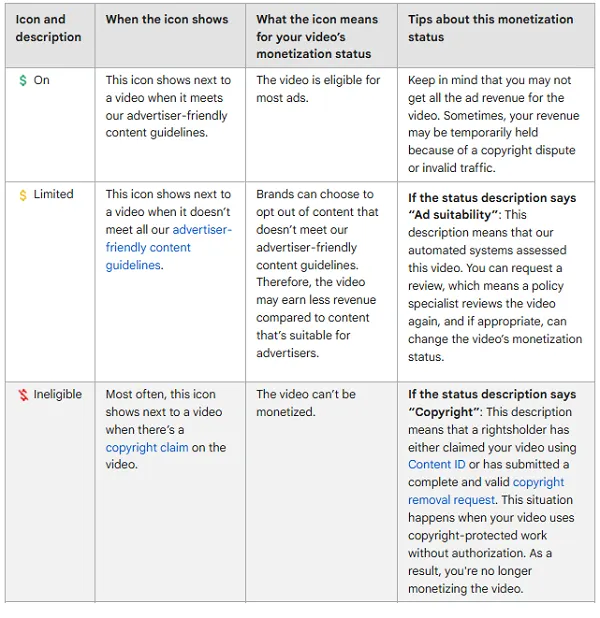
In order to further refine this, YouTube says that it will now allow content focusing on abortion, self-harm, suicide, and domestic and sexual abuse in a non-graphic manner, to earn full ad revenue “when the content is dramatized or discussed.”
As explained by YouTube:
“In the past, the degree of graphic or descriptive detail was not considered a significant factor in determining advertiser friendliness, even for some dramatized material. Consequently, such uploads typically received yellow dollar icon, which restricted their ability to be fully monetized. With this week’s update, our guidelines are becoming more permissive and creators will be able to earn more ad revenue.”
YouTube says that it’s making the change in response to creator feedback as to how the guidelines are impacting dramatized and topical content, and leading to less ad revenue on those uploads.
“We want to ensure the creators who are telling sensitive stories or producing dramatized content have the opportunity to earn ad revenue while respecting advertiser choice and industry sentiment. We took a closer look and found our guidelines in this area had become too restrictive and ended up demonetizing uploads like dramatized content.”
YouTube says that dramatized content, in general, is okay for ad placement, which is why it’s now altering its approach, in order to cater to creators looking to create dramatizations related to these topics.
“So, as long as the content steers clear of very descriptive or graphic scenes or segments, creators can now earn more ad revenue.”
YouTube further notes that content related to child abuse and eating disorders are not included in this update, while overly descriptive segments within dramatized content will remain ineligible for ad revenue.
But for those looking to create dramatic content related to these topics, which could serve an important story and/or educational purpose, you won’t have your monetization restricted as a result of the topic alone.
YouTube says that it will monitor the update, and consider further changes to its policy based on feedback.