


Snap Inc. has acquired spatial AI developer Illumix as part of an expanded push to build next-level AR and AI experiences that will help to blend digital and physical worlds.
Illumix specializes in spatial understanding through its digital mapping system, which will help Snap power its evolving AR and AI glasses experience.
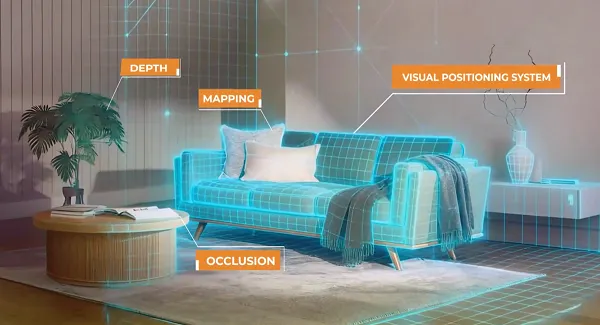
Indeed, on the Illumix website, there’s a specific section which outlines how its technology can assist in the development of “lightweight AI glasses or fully fledged AR headsets.”
“For AI glasses, we provide long-term memory and user profiles that understand your specific context and serve up personalized experiences and content,” Illumix said. “For AR glasses, we unlock the complete spatial stack: real-time 3D mapping, centimeter-accurate localization, and persistent world anchoring.”
As such, the acquisition makes perfect sense. Snap is on the brink of launching its first consumer AR glasses, and the company is looking for more ways to optimize and improve the device to compete with similar offerings from big tech providers.
As per Sinha: “We started Illumix with an ambitious belief: that digital experiences would eventually become part of the physical world around us, in the spaces where people live, move, and interact. Over the past eight years, our team has built a proprietary spatial mapping and AR platform designed to make AR experiences work reliably in these real-world environments — persistent, context-aware, and anchored to the spaces around us.”
Sinha said the acquisition will power the company’s next chapter and drive expanded innovation alongside Snap.
“Snap’s bold vision for AR and AI strongly aligns with what we have always believed: that the future of computing will be more immersive, more intuitive, and ultimately more human,” Sinha said.
The question then is just how much Illumix can help Snap, and whether Snap can actually compete with Meta and Apple in the evolving wearables space.
Because right now, based on what’s known regarding Snap’s AR Specs device, Meta’s AI glasses are likely going to be more advanced from the get-go, even with Specs’ AR functionality, with better AI features, along with improved battery life and camera quality, which is ultimately likely to prove more enticing to consumers than Snap’s chunky AR-enabled device.

Snap has long been the leader in AR development, and the company hosts some of the most innovative, engaging applications of AR. But whether its AR device can compete with Meta’s wearables, which continue to see strong sales, is a big question that will dictate the future opportunities for the company.
Maybe, through the integration of Illumix, Snap will be able to build a developer platform for AR and AI that will actually be of value even if its own device fails, driving another potential avenue of opportunity for the business.
But right now, it’s hard to see how this acquisition will significantly alter Snap’s fate, as it moves into its next phase.