


Snap announced the official launch of its Specs augmented reality glasses, which could make the company a key player in the next stage of wearable computing and interactive digital experiences.
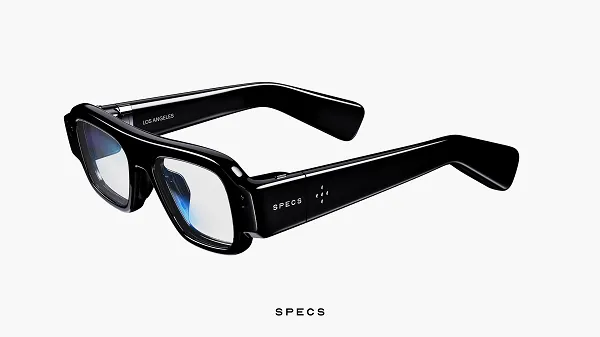
Specs offer a standalone AR experience, with all of the computing power built into the device itself. That’s why the glasses are chunkier than the initial prototypes of Meta’s coming AR glasses, with Meta planning to launch its AR device with an accompanying compute puck that will need to be carried around when wearing the device.
Snap has opted instead to go with a fully-integrated system instead. Which, inevitably, means Snap’s glasses are heavier, while the bigger frames that are required to accomodate this all-in-one system make the glasses look more like safety goggles than fashionable shades.
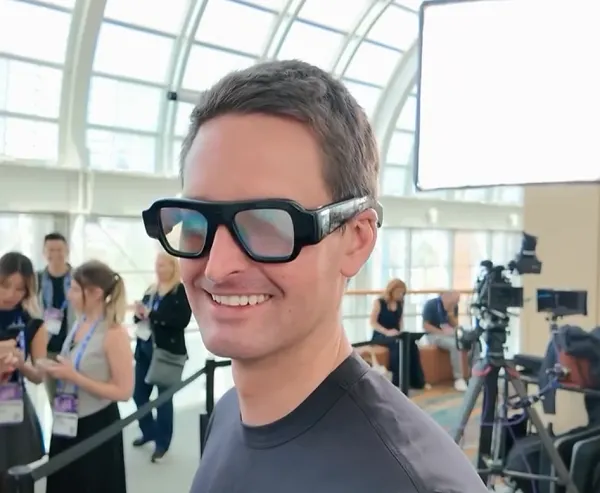
Snap has tried to reduce the device weight through the use of advanced polymers in building the frames, but they still weigh a lot more than Meta’s current Display device. Snap Specs weigh 132 grams for the smaller model and 136 grams for the larger model. For comparison, Meta’s Display glasses weigh 60 grams for the small version and 70 grams for the larger model. A standard roll of 50 U.S. pennies weighs about 125 grams.
Whether weight is a key selling point will likely depend on use case and how comfortable the glasses are in practice.
Snap said that its Specs display system is powered by a proprietary liquid crystal on silicon technology, “delivering a 51-degree field of view and 16 million colors.”
As per Snap: “The result is a large, vivid display that feels like a 24-inch desktop monitor when you’re working, or a 115-inch home cinema screen placed about 10 feet away when you’re watching a movie.”
Snap also redesigned its waveguide technology “to create a clearer and more seamless view of the world around you.” The device is powered by two Snapdragon processors: one for processing vision-related tasks and one dedicated to running the internal system.
In terms of battery life, Snap said Specs will run for up to four hours, with the included charging case providing four additional charges, for up to 20 total hours.
When Specs are recording, an LED in the middle of the device will indicate to people that they are being captured.
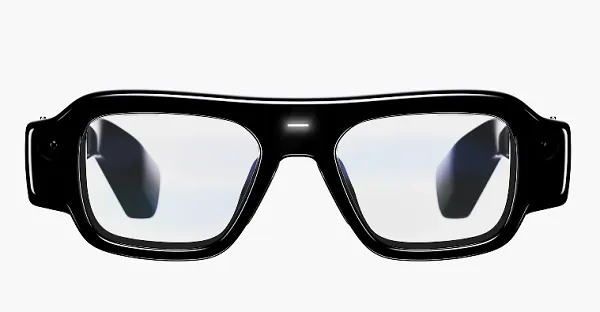
It’s an interesting looking package. Well, interesting in the functional sense, less so in the Groucho Marx-style look. Either way, Snap’s working to maximize interest via a new campaign that features a range of celebrities wearing the device.

There’s some very careful angling going on in these photos, in order to make the glasses look somewhat sleek.
Maybe that will help spark more interest, and get more people logging in to pre-order to device.
But the price is pretty steep.
Prospective customers can place an order for Specs from today for $2,195, including a $200 refundable deposit.
By comparison, Meta’s Display glasses cost $799, although it’s important to reiterate they’re not fully AR capable. Apple’s Vision Pro, which is more akin to a VR headset and is AR capable, sells for $3,499.
Snap’s Specs sit somewhere between the two, though given Snapchat’s younger audience, it’ll be interesting to see how the company plans to pitch that price point to younger buyers.
Though Snap’s audience is affluent and the company will likely grab attention with this broader promotional push, as well as with the added functionality of AR-enhanced vision.
Indeed, Snap said that there are already hundreds of built-in Snap Lenses available for Specs. That will unlock a range of shared experiences that screens cannot, “from reading the green, to overlaying interactive lessons onto your drum set with Drum Kit, to education tools like Vector Fields that make invisible forces visible,” the company said.
There’s a lot to like about the device, or at least to be intrigued by, and it’ll be interesting to see how first-mover advantage helps Snap promote this. Meta plans to launch its AR glasses next year, and those will look a lot different than Snap’s offering.
Will that matter? Will style be the key selling point, or functionality, and how will Snap’s AR Specs compare to what Meta eventually releases?
Based on early information, Meta’s AR glasses will be more stylish and Meta will also have the advantage of its now established distribution pipeline. The company has already shipped almost 10 million pairs of its AI glasses.
But for now, Snap is stepping up to the plate in the hopes that this will take its business to a new level.